In brief
Investigators found that the MD-11 freighter operated by UPS had a critical structural flaw identified by Boeing over a decade ago. The engine separation that led to the crash, resulting in 15 fatalities, raises serious concerns regarding Boeing's internal assessments and safety protocols.
An aircraft that crashed in flames in Kentucky in November had a structural flaw that had been identified by Boeing on similar planes 15 years ago, according to investigators.
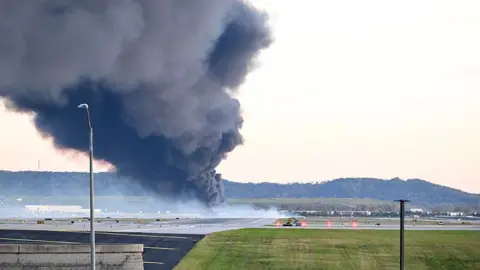
The MD-11F freighter operated by UPS crashed after one of its engines separated from the wing as it was preparing to take off from Louisville. The plane briefly lifted off from the runway before hurtling out of control into an industrial area, killing fifteen individuals including three crew members and twelve people on the ground.
In an update, the US National Transportation Safety Board (NTSB) revealed that cracks in the engine mounting assembly had previously occurred on several other aircraft. At the time, Boeing concluded that the issue would not result in a safety of flight condition.
The MD-11 is a relatively elderly design that was originally produced by McDonnell Douglas, which Boeing acquired in 1997. The last MD-11 rolled off the production line in 2001, but Boeing has continued to provide parts and service support.
In the aftermath of the Kentucky disaster, the NTSB issued a preliminary report highlighting cracks in the engine attachment mechanism. Its latest update elaborates on fractures due to fatigue in a critical bearing and its mounting.
Tim Atkinson, a former air accident investigator, expressed concern over the NTSB's findings, pointing out that the structural components involved are essential to the aircraft's safety. He emphasized the extraordinary nature of Boeing's previous assessment regarding the lack of safety consequences from a failure of the part.
Boeing's internal processes have come under scrutiny multiple times recently, having faced criticism for the software flaws in its 737 Max, which were linked to two fatal accidents in 2018 and 2019. They also faced backlash when a door panel fell off a brand new 737 Max shortly after takeoff in early 2024.
In a statement regarding the recent crash, Boeing extended its condolences to the victims' families and affirmed its collaboration with the ongoing NTSB investigation, which has yet to issue firm conclusions.