In brief
Biana Watre Momin, a retired English literature teacher from Meghalaya, takes a remarkable leap into acting at the age of 70 with her role in the Malayalam film 'Eko'. Despite having no prior experience in acting, Momin's portrayal of an enigmatic elder has resonated with audiences and critics alike, marking a significant chapter in her life. This unexpected journey encourages representation of indigenous voices in cinema and showcases the resilience of lifelong learning.
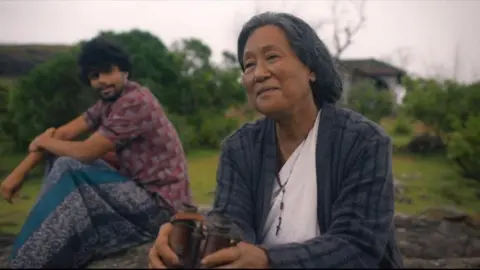
At 70, Biana Watre Momin took a leap far from home. The retired college teacher left the Garo Hills in north-eastern India's Meghalaya state, where she led a quiet family life - caring for four dogs and doting on her grandchildren - and travelled more than 3,000km (1,864 miles) south to Kerala to act in a film.She was dealing with a language she did not understand, embracing a role whose meaning would only reveal itself once the camera began to roll. The film was 'Eko', a Malayalam-language film that would change the course of her life.For Momin, a member of the Garo tribe - one of the indigenous communities of Meghalaya, a largely tribal state - acting had never been an ambition, or even a distant curiosity. Growing up, my town did not have a cinema or theatre, she told the BBC. She was never trained in the performing arts, unless you'd call teaching in a classroom a kind of performance, she adds with a laugh.As a retired English literature teacher, with a fondness for Romantic poetry, Momin had little reason to believe that a camera would one day frame her face. Yet when 'Eko' entered her life, it offered an unexpected adventure.Initially hesitant due to her lack of acting experience and the lengthy travel from home, her daughter encouraged her: 'Have faith in yourself and try something new.'In 'Eko', a title that plays on the word 'echo', Momin plays Mlathi Chettathi, an enigmatic elder living alone in the Western Ghats, known for its dense forests and mist-covered hills. Her character embodies the film's fog-laced landscape and moral core.Shot on a modest budget and completed in 45 days, 'Eko', now available on Netflix, has emerged as a critical success. The film has generated intrigue, particularly around Momin's performance, which stands out for its quiet power. Director Dinjith Ayyathan sought a fresh face for the role, ultimately leading to Momin's selection after she had appeared in a short film on Garo folklore.It seems an unusual coincidence that a short film involving animals led me to a role also set in the company of animals, Momin reflects. During auditions, her spontaneous emotional depth impressed the team, encapsulating the character's spirit.Crew members applauded her sharp grasp of emotion, angles, and movement, linking her portrayal to her life experience. I am proud, as an indigenous person, that there are creative people willing to take a chance on me at this age, Momin states, expressing hope for increased representation in the arts.Despite being recognized for her significant contribution and attracting attention from filmmakers across India, Momin remains grounded, returning to her life at home. We’ll be discussing Arundhati Roy's 'Mother Mary Comes to Me' this week in my book club, she quips, reminding us all that the journey is just beginning.