In brief
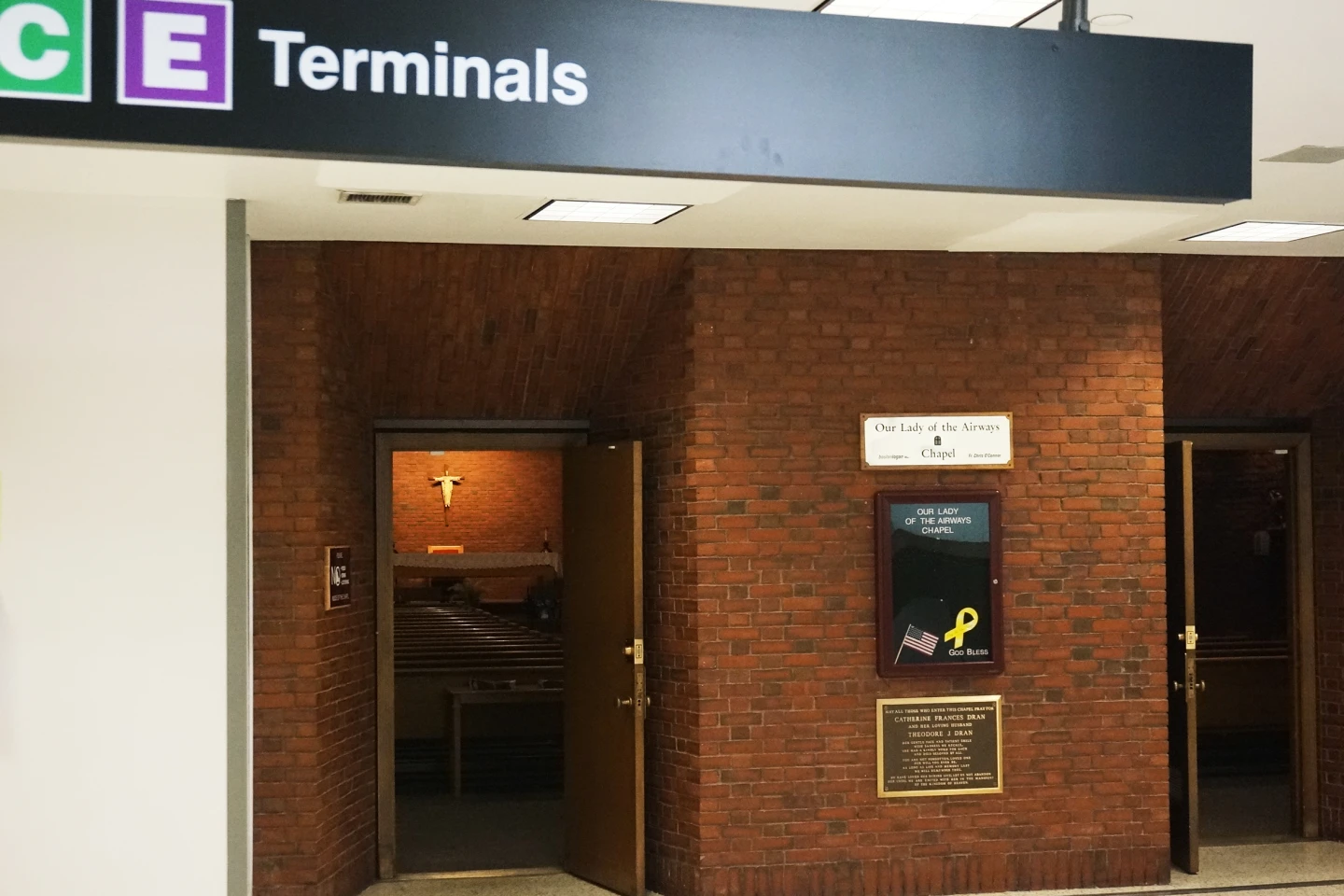
Amid the hustle and bustle of holiday travel, airport chapels provide a crucial space for respite and reflection. Boston's Our Lady of the Airways stands as a testament to the need for spiritual support in the airport environment, welcoming diverse faiths while continuing to honor its Catholic roots. The growing trend towards interfaith and meditation spaces exemplifies the evolving landscape of airport spirituality, which seeks to accommodate the varied needs of modern travelers and workers.
BOSTON (Echosphere News) — With peak holiday travel signaling a surge in airport activity, finding weavings of peace amidst the chaos can seem like an elusive quest. Yet, airport chapels have been actively providing solace to travelers and workers for decades, fulfilling a vital role in the travel experience.
“I love seeing travel bags and workers’ outfits. It gives hope that you’re ministering to a need,” expressed Rev. Brian Daley from Our Lady of the Airways at Boston’s Logan International Airport. Historically significant as the first airport chapel in the United States, commissioned in the 1950s, it continues to operate primarily as a Catholic church, while also embracing various faiths.
On a typical Friday afternoon, the brick-faced chapel sees individuals like Brian Babcock, a Southwest Airlines baggage handler, stopping for moments of prayer before their shifts. “It’s awesome that I have a chapel within walking distance of where I work,” he noted, emphasizing the importance of such a sanctuary in a bustling environment.
The Origins of Airport Chapels
Initially constructed to serve airport employees on long shifts, Our Lady of the Airways and its counterparts at JFK and O'Hare were established to ensure that workers could maintain their spiritual commitments. Inspired by Pope Leo XIII's social doctrine, Boston’s Cardinal Richard Cushing led efforts to build chapels that met the spiritual needs of those laboring in fast-paced environments.
Despite ongoing challenges, including declining religiosity and a shortage of priests, Our Lady of the Airways remains committed to its mission. Currently, the chapel offers Sunday Mass as it continues to foster a spirit of inclusivity for all travelers.
A Shift Towards Interfaith Spaces
Over the past three decades, many airport chapels have evolved into interfaith spaces. Spaces that offer quiet reflection rather than religious services are increasingly common, a trend characterized by minimalistic designs that can accommodate various faith practices. Wendy Cadge, a sociology professor at Bryn Mawr College, notes that “most chapels now resemble warm waiting rooms rather than dedicated religious spaces.”
At Chicago's O’Hare Airport, for example, the pastoral team has adapted their spiritual services to incorporate both Catholic and interfaith elements. Chaplain Rev. Michael Zaniolo expressed the necessity for spaces where airport workers can find a moment of peace: “Our first customer is the airport worker. The traveler is the frosting on the cake.”
The Importance of Spirituality in Travel
Both chapels at Logan and O’Hare serve as vital retreats from the frenetic pace of travel, addressing a universal need for connectivity and comfort. As airport populations grow, so does the demand for accessible spiritual support, a reminder of the humanity intertwined within the logistical intricacies of travel. As hope lingers amid terminal anxiety, these chapels strive to remain beacons of solace and reflection—even as they adapt to the needs of an increasingly secular world.