In brief
Communities in Southern California, specifically Forest Falls and Oak Glen, faced severe mudslides and debris flows after over an inch of rain fell in just two hours. Authorities carried out rescues of stranded motorists and are assessing damage to homes and infrastructure as the community grapples with the effects of climate-related weather patterns.
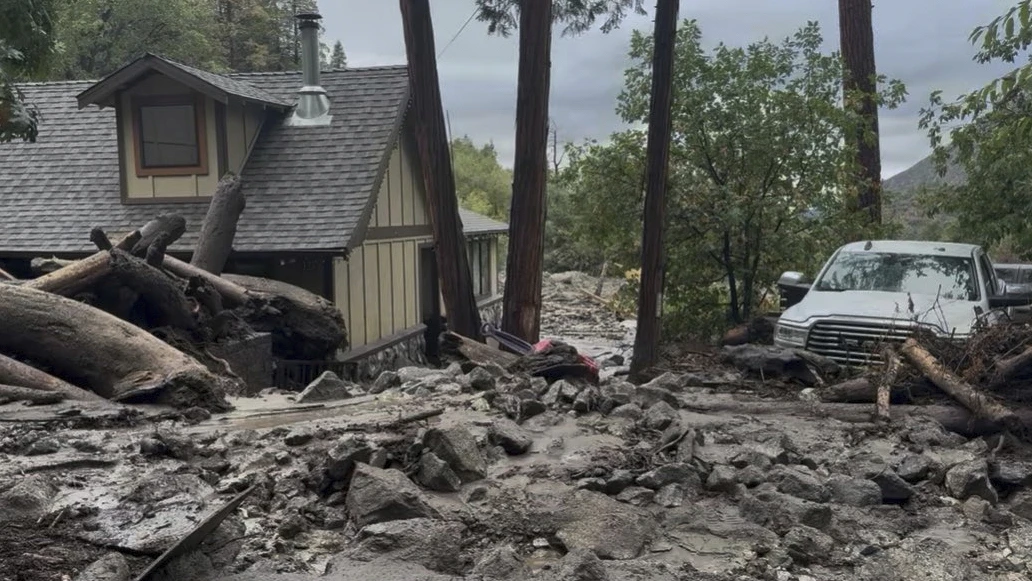
OAK GLEN, Calif. — Southern California has been hit with significant mudslides and debris flows following intense rainfall from the remnants of Tropical Storm Mario, leading to substantial disruptions in various mountain communities.
Authorities reported that the heavy rain caused trees to be uprooted and vehicles to become trapped, with some drivers stranded for nearly ten hours. Fortunately, there were no injuries or missing individuals reported, according to Christopher Prater, a public information officer for the San Bernardino County Fire.
The mudslides specifically affected the small mountain communities of Forest Falls, Oak Glen, and Potato Canyon, with the National Weather Service confirming that around 1.5 inches of rain fell in under an hour. These conditions exacerbated the threats posed by previously scorched land from past wildfires, which had left burn scars vulnerable to such severe weather.
One individual, Kael Steel, shared his experience, describing the sudden onset of the mudslides while he was driving to an amusement park from Big Bear. He recounted, Suddenly we started seeing rocks and stuff coming down the side of the mountain, emphasizing the rapid changes on the roads. The area was left in disarray, with officials indicating it could take time to fully assess the damage.
As of Friday morning, California Highway Patrol confirmed the closure of state Route 38, a narrow and winding road used to access the nearby resort town of Big Bear Lake. Emergency responders swiftly rescued ten stranded motorists using the resources available.
The severity of the rainfall was atypical for Southern California, where summer thunderstorms more usually bring less than half an inch of rain per hour. Meteorologist Kyle Wheeler noted that the region experienced nearly two inches of rain in a very short time, highlighting the challenges brought by climate variability and its impact on local environments.
Despite the challenging conditions, Prater conveyed the community's resilience, stating, The community obviously has been impacted fairly significantly. How bad, we don’t know yet. As damage assessment teams are set to evaluate the area, the need for effective infrastructure adaptable to extreme weather events becomes increasingly imperative to safeguard these mountain communities in the future.