
In brief
The appointment of Elon Musk as the head of the Department of Government Efficiency underscores the billionaire's influence in shaping US policy and regulatory framework to align with his business interests, while prioritizing significant cuts to bureaucracy.
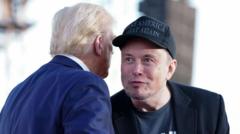
In a noteworthy development, billionaire entrepreneur Elon Musk has been appointed to lead Donald Trump's newly established Department of Government Efficiency (Doge) as Trump prepares for his second term as President. The announcement, made via social media, highlights Musk's role alongside former Republican presidential contender Vivek Ramaswamy in curbing government inefficiencies, slashing unnecessary regulations, and redefining the structure of federal agencies.Musk, known for his transformative business strategies, views this position as an opportunity to exert considerable influence on government policy policies that directly impact his enterprises, from Tesla to SpaceX. He has publicly expressed a belief that the federal budget could be cut by at least $2 trillion, a significant reduction from the current $6.5 trillion. Ramaswamy is pushing for the elimination of various federal departments, indicating a robust agenda to streamline government operations.The trajectory of Musk's management style was illustrated when he took over Twitter (now rebranded as X) for $44 billion, where he dramatically downsized the workforce from approximately 8,000 to 1,500. His focus on efficiency led to monetization strategies and less stringent content moderation policies. This approach, while effective for cutting costs, also prompted concerns about rising misinformation and hate speech on the platform.Political analysts observe that Musk's keen sense of efficiency will likely drive initiatives aimed at dismantling red tape and modernizing federal protocols. Scholars note that while his primary focus may appear to be on improving government performance, his role also positions him as an influential player in Trump's administration. Critics have pointed to Musk's career as a clue to the potential conflicts of interest inherent in his new role. He's been vocal about his frustrations with federal regulations affecting his companies, particularly concerning unionization issues at Tesla and regulatory fines incurred by SpaceX. His push for a more relaxed regulatory framework could certainly benefit his business dealings.Musk, with an estimated net worth of $290 billion, has also made substantial donations to Trump's campaign, reportedly a sum of around $200 million, further solidifying his status as a valuable ally. Analysts hint that his relationship with Trump may be transactional, allowing him to leverage this newfound power to promote initiatives that favor his business interests.As Musk settles into his role as Trump's efficiency czar, his insider influence could reshape critical policies, particularly as global challenges like the war in Ukraine loom large. This intersection of business savvy and political power has raised eyebrows, prompting discussions on what it means to place a billionaire in charge of government efficiency efforts. In his quest for less bureaucracy, Musk's strategies could redefine how both business and government interact, posing significant implications for the future of regulatory practices in the United States.

