
In brief
As China moves forward with the construction of the world's largest hydropower dam on the Yarlung Tsangpo river in Tibet, a wave of alarm is rising over its potential impact on local communities, ecosystems, and transborder relations. The dam is projected to generate three times as much energy as the Three Gorges Dam, currently the largest in the world. While state media touts economic and ecological benefits, critics warn of displacement and environmental damage.
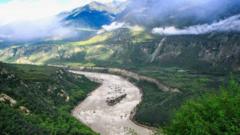
The Yarlung Tsangpo Project, poised to dominate global hydropower output, has reignited fears among human rights and environmental groups regarding community displacement and ecosystem degradation on the Tibetan Plateau. Chinese authorities have marketed the dam as an environmentally safe project, claiming it could promote local prosperity and support national climate goals. However, critics argue that extensive impacts on local populations and nature will accompany the substantial energy output.This ambitious project, announced in late 2020, highlights ongoing tensions associated with Chinese governance in Tibet—a region under strict control since its annexation in the 1950s. Activists have long accused Beijing of exploiting Tibetan resources, and reports of recent protests against similar initiatives, such as the Gangtuo dam, underline these tensions. Authorities reportedly reacted with force, arresting and injuring numerous protesters.Proponents of the Yarlung Tsangpo dam assert it will not significantly disrupt the environment, despite lacking clarity on its exact impact on displacement. Previous constructions, like the Three Gorges Dam, saw over a million people relocated, raising concerns over similar outcomes for the Yarlung Tsangpo.As construction gears up, engineering challenges loom large. The dam, part of a series of hydropower projects on the river, requires extensive tunnel excavations through the earthquake-prone Namcha Barwa mountains. Experts warn that the construction may trigger landslides, as the river flows through one of the world's deepest gorges.Moreover, as the Yarlung Tsangpo travels through India before reaching Bangladesh, experts fear that control over this waterway could grant China leverage over regional water resources, potentially affecting the economies of downstream nations. In response to China's plans, India has hinted at its own hydropower projects to counterbalance the situation.The debate around the Yarlung Tsangpo dam encapsulates a critical intersection of renewable energy ambitions and environmental stewardship, pressing the question of how to balance development with human rights and ecological concerns in an era of climate urgency.
