In brief
A collaboration of X-ray imaging and artificial intelligence has successfully retrieved text from a burnt scroll buried by Mount Vesuvius 2,000 years ago, showcasing the potential of modern technology in unraveling historical mysteries.
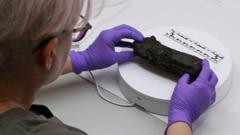
A remarkably preserved but burnt scroll from Herculaneum, a Roman town engulfed by the eruption of Mount Vesuvius in 79AD, has been digitally "unwrapped" for the first time in two millennia, unveiling a glimpse of its hidden text. The scroll, resembling a lump of charcoal due to severe charring, is far too delicate to be physically opened, but advancements in X-ray imaging and artificial intelligence have allowed scientists to virtually explore its contents.Stephen Parsons, the lead on the Vesuvius Challenge project, which seeks to unlock the Herculaneum scrolls, expressed optimism over the project, asserting that they are now confident they will read nearly the entire scroll. Preliminary scans have already revealed identifiable letters, suggesting the text may pertain to philosophical themes.After the towns of Herculaneum and Pompeii were submerged under volcanic ash, hundreds of carbonized scrolls were unearthed, initially deemed unreadable and left untouched for years. The project took a turn when researchers became convinced that high-tech imaging could safely provide information from these ancient artifacts.To analyze the scroll, researchers transported it to the Diamond Light Source facility in Oxfordshire, where a powerful synchrotron generates X-ray beams to examine it non-invasively. With precision capable of recognizing minute variations, scientists can identify each layer of the scroll and digitally recreate its form, revealing the estimated 10 meters of papyrus within.Dr. Adrian Mancuso explained the meticulous process involved in identifying the layers of the scroll, while artificial intelligence plays a critical role in detecting ink throughout. This is particularly challenging since both the ink and the papyrus base are carbon-based and hence visually indistinguishable.Current progress indicates that the scroll is rich with text content, prompting the team to continue refining the reconstruction, moving from a few words to entire passages. A previous achievement within the Vesuvius Challenge revealed about 5% of another Herculaneum scroll, focused on Greek Epicurean philosophy, hinting that this newly analyzed scroll may share a similar thematic subject.Nicole Gilroy, head of book conservation, highlighted the human connection embedded in these ancient texts, expressing their emotional significance as they link modern society to the individuals who once cherished and documented their thoughts in these scrolls. As the scientific community pushes the boundaries of technology to decipher the past, the potential narratives contained within these charred relics create a narrative bridge between antiquity and the present.