
In brief
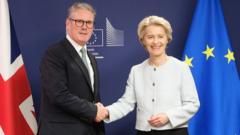
Prime Minister Sir Keir Starmer’s upcoming informal summit with EU leaders highlights the complexities and aspirations of renewed UK-EU relations post-Brexit.
The United Kingdom finds itself in a pivotal moment as Prime Minister Sir Keir Starmer has been invited to a critical informal summit with EU leaders in February 2025. This invitation marks a significant step in rekindling a relationship strained by the Brexit negotiations. The summit's primary emphasis will be on enhancing future security and defense cooperation against the backdrop of an increasingly unstable international landscape, notably characterized by conflicts across Europe and the Middle East, and the looming presence of Donald Trump’s potential return to the U.S. presidency.Increasingly, both the EU and the UK recognize the urgency of collaborating on security and trade. The aftermath of Brexit highlighted the risks of division, especially when contemplating external threats. Starmer’s Labour government understands that Europe's cooperation is essential to fulfilling its priorities, from the economy to migration, and acknowledges the mutual advantages of a closer UK-EU relationship.In light of Labour’s ambition for a significant reset in ties with the EU, foreign ministers and key figures have engaged in frequent shuttle diplomacy. Foreign Secretary David Lammy and Chancellor Rachel Reeves have both highlighted their commitment to improving relations, accentuating a spirit of goodwill that now characterized Brussels’ perspective on the new UK administration.However, skepticism remains entrenched in EU quarters about the UK’s intentions. While there is an eagerness to pursue closer relations, the EU is keenly aware of London’s stringent post-Brexit red lines, particularly regarding the free movement of people and participation in the Customs Union. The expectation is that meaningful economic relationships will necessitate sacrifices from both sides, especially given the limited economic gains perceived by the EU.Despite these challenges, sectors ripe for collaboration, such as defense and security, present low-hanging fruit for initial agreements. The UK and EU could streamline existing cooperation and jointly address issues like cyber threats and energy security. Importantly, both sides are also focused on improving economic ties without appearing to undermine Brexit.Future adjustments in economic relations hinge on profound compromises on both sides. The potential for a Youth Mobility Scheme and fishing rights negotiations has emerged as key points of leverage for the UK government. Meanwhile, Labour aims to explore agreements that facilitate cross-Channel professional movement and streamline trade, including veterinary cooperation aligned with EU standards.Both the UK and the EU are expressing interest in climate coordination, specifically in carbon trading, which promises significant financial benefits as they navigate post-Brexit constraints. The North Sea region, known for its offshore wind potential, is central to both nations' energy strategies.Public sentiment appears to favor increased cooperation, with recent polls indicating that a significant portion of voters in both the UK and EU support stronger ties, viewing them as beneficial for economic growth, security, and migration management. A notable majority of UK voters seems ready to entertain a return to freedom of movement, underlining a disconnect between political reluctance and public desire for engagement.In conclusion, as the geopolitical landscape evolves, the challenge lies in bridging the gap between public expectations and political realities. With substantial negotiations ahead, it remains to be seen if the UK can forge a renewed relationship with the EU that meets both parties’ needs in an increasingly complex world.
