In brief
British archaeologist Piers Litherland believes his team has uncovered a potential second tomb of Pharaoh Thutmose II near Luxor, which could house the mummified remains of the king. This discovery follows the recent finding of a tomb associated with Tutankhamun and showcases the ongoing exploration of ancient Egypt’s rich history.
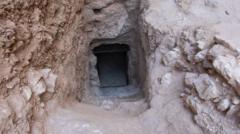
7 hours agoA British archaeological team led by Piers Litherland has announced a potential discovery of a second tomb belonging to Pharaoh Thutmose II, adding to recent exciting findings in Egypt. Just days ago, Litherland revealed the discovery of a tomb after more than a century since Tutankhamun’s burial site was found. His latest findings suggest that this new tomb may indeed house the mummified remains of Thutmose II. According to Litherland, the first tomb is believed to have been emptied shortly after burial due to flooding, with its contents possibly relocated to a second site nearby—an area believed to be marked by a 23-meter (75ft) mound of limestone, ash, rubble, and mud plaster, which was intentionally constructed by the ancient Egyptians to resemble a mountain in the Western Valleys of the Theban Necropolis, located close to Luxor.In a previous excavation, Egyptologists discovered a posthumous inscription indicating that the belongings associated with Thutmose II might have been moved by his wife and half-sister, Hatshepsut. The British-Egyptian team is currently working meticulously by hand to excavate further into the site, abandoning plans to tunnel as it was deemed “too dangerous.” Litherland anticipates that complete access to the tomb could be achieved in approximately a month.The first tomb’s excavation revealed intricate decorations, including an intact ceiling adorned with blue paint and yellow stars—a distinctive feature found only in royal burial sites, emphasizing the tomb's significance. “The emotion of getting into these things is just one of extraordinary bewilderment because when you come across something you're not expecting to find, it's emotionally extremely turbulent really,” Litherland stated, reflecting on the monumental discovery.Thutmose II is notably recognized as the spouse of Queen Hatshepsut, one of the most celebrated pharaohs of Egypt, and an ancestor of the young king Tutankhamun, who ruled approximately between 1493 and 1479 BC. The recent findings offer a promising glimpse into the opulent and mysterious world of ancient Egyptian royalty, reigniting interest in uncharted archaeological territories.