
In brief
Archaeologists have unintentionally uncovered Valeriana, a vast Mayan city in Campeche, Mexico, using Lidar technology. Housing an estimated population of 30-50,000 during its peak, this discovery reshapes our perception of ancient civilizations in the tropics and underscores the potential for future archaeological findings.
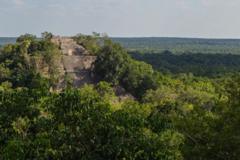
A significant archaeological breakthrough has occurred in the jungles of Campeche, Mexico, with the discovery of an extensive Mayan city, named Valeriana, lost beneath the forest canopy for centuries. The hidden city, comparable in size to Edinburgh, boasts impressive structures, including pyramid temples, sports fields, and interconnected causeways that hint at a sophisticated civilization.The find was made by accident when Luke Auld-Thomas, a PhD student at Tulane University, stumbled upon a Lidar radar survey while searching online. Lidar, or Light Detection and Ranging, is a remote sensing technology that employs laser pulses to create detailed maps of ground surfaces hidden beneath vegetation. By applying archaeological methodologies to the survey data, Auld-Thomas revealed a sprawling ancient metropolis likely inhabited by 30,000 to 50,000 people during its zenith around 750 to 850 AD.The significance of Valeriana is profound. Professor Marcello Canuto, a co-author of the research, notes that this discovery challenges the narrative that tropical regions were merely sites where civilizations declined. Instead, it suggests that these areas were vibrant centers of rich and complex cultures. While the specific reasons behind the city's eventual abandonment remain unclear, climate change is cited as a likely contributing factor.Located merely a 15-minute hike from a major road near Xhipul, the city features two primary zones, each around 2 kilometers apart, interconnected by residential areas and causeways. Archaeologists discovered plazas adorned with temple pyramids, which served as sites for religious practices, along with evidence of a court for the ancient ball game and a reservoir that indicates advanced water management for its large population.The work of Auld-Thomas and colleagues has revealed over 6,764 various structures within Valeriana. Findings like this align with emerging evidence that the Mayans lived in densely populated urban environments, contrary to previous assumptions of isolated settlements. As Professor Elizabeth Graham from University College London remarks, the results affirm that the landscape previously appeared “wild” is, in fact, teeming with remnants of past human habitation.As the researchers contemplate further excavation, it is evident that many more cities are waiting to be discovered, thanks to Lidar technology. Canuto highlights a staggering increase in mapped areas, estimating that Lidar has revealed ten times the ground covered by traditional methods in just a decade.Despite the wealth of knowledge being discovered, Auld-Thomas acknowledges the daunting challenge of studying every site found. With so much history hidden in the jungle, the archaeological world stands on the brink of exciting new revelations about ancient civilizations. The team's findings have been published in the academic journal Antiquity and signal a promising future for archaeology, blending advanced technology with the rich history of the Mayan people.
