
In brief
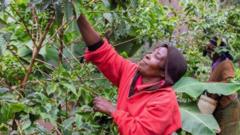
Amidst Kenya's lush coffee-growing highland, local farmers are grappling with the harsh realities of climate change, which threatens their crops and traditional way of life. Once thriving, these small-scale producers of renowned Kenya AA beans are seeing diminished harvests due to rising temperatures, erratic rainfall, and increasing prevalence of diseases exacerbated by an unstable climate.
Struggling against a backdrop of harsh economic realities, farmers like Simon Macharia are caught in a cycle of low wages and high production costs, with many earning less than the price of a single cup of coffee abroad. With 93% of Kenyan coffee farmers already feeling the impacts of climate change, adaptations such as tree planting are being implemented to shield coffee plants. Nonetheless, uncertainty looms, leading to a growing pessimism around the future of coffee farming in Kenya. In tackling both the environmental and economic crises, the resilience of these farmers remains vital as they seek to preserve the identity of Kenya's iconic coffee industry. ---In the lush, volcanic highlands of Kenya's Rift Valley, coffee farmers like Simon Macharia are increasingly facing significant challenges due to climate change. These small-scale producers cultivate the highly sought-after Kenya AA coffee beans that have gained international acclaim. However, the delicate coffee plants are sensitive to changing climatic conditions, which pose a threat to their livelihoods. Erratic rainfall and rising temperatures are leading to decreased harvests and increased diseases affecting coffee crops.In an already precarious economic landscape, coffee growers often earn significantly less than what consumers pay for their coffee in Western markets. Many laborers endure grueling work schedules for minimal pay while coping with the demands of climate-induced challenges. Despite efforts to introduce climate adaptation techniques, including tree planting for shade and improved soil health, uncertainty underscores their resilience.The coffee sector in Kenya is vital, employing roughly 150,000 people and representing a crucial economic lifeline. Yet as global temperature rises jeopardize future production capabilities, the prospect of sustaining their cherished crop hangs in jeopardy. Farmers voice concern for the future of the industry, indicating that current conditions may deter the next generation from continuing a tradition rich in cultural and economic significance.
