In brief
Global financial markets experienced severe losses as China's response to U.S. tariffs led to a record drop in stock indexes, with potential repercussions for international trade and economic stability, heightening recession fears among analysts.
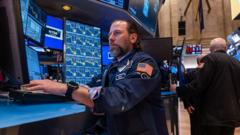
Global financial markets were rattled on Friday, suffering significant losses as China retaliated against tariffs imposed by the Trump administration, escalating the trade war and raising concerns about its impact on the global economy. The U.S. stock market saw declines of more than 5% across major indexes, with the S&P 500 plummeting almost 6%, marking the worst week for stocks since 2020. The United Kingdom's FTSE 100 index also fell nearly 5%, experiencing its largest drop in five years, while Asian markets, as well as European exchanges in Germany and France, faced similar declines.In response to the tariffs, which included a sweeping 10% import tax affecting a wide array of goods from various countries, analysts expressed fears of a contraction in international trade and predicted that many nations could face economic recession. The global stock market had already lost trillions of dollars in value since the announcement of these tariffs. Trump, however, remained defiant, urging his supporters on social media to remain optimistic about the robust U.S. labor market, stating, "Hang tough, we can't lose."China's swift rebuttal included imposing a 34% tariff on U.S. imports and curbing the exports of crucial minerals while placing American companies on a blacklist. This assertive response was labeled by Chinese officials as "bullying" and a breach of international trade norms. Amidst these escalating tensions, the European Union (EU) signaled its intention to retaliate as well, with trade commissioner Maroš Šefčovič emphasizing the need for a "fresh approach" to the U.S.-EU trade relationship.Despite these concerning developments, some investors chose to downplay the market's rapid declines. Many noted that these downward shifts were occurring after an extended period of rising share prices. Tim Pagliara, CEO of CapWealth, suggested that Trump's trade policies might be a necessary push to address long-standing trade imbalances. On the other hand, Jerome Powell, head of the U.S. central bank, acknowledged the economic uncertainty caused by the unforeseen tariff heights, which could impede growth and elevate prices.Amidst the uncertainty, the housing sector exhibited relative strength as investors speculated that the market turmoil could lead to reduced mortgage interest rates. Major corporations, including Nike and Apple, felt the pinch of tariffs and suffered substantial blows to their stock values. As analysts grappled with the potential recession risk, JP Morgan revised its forecast for a global economic downturn to 60%, a notable increase from 40%.Farmers and businesses in the U.S. grappled with the impending financial fallout from the tariffs, with concerns raised about heightened costs for materials and the potential for retaliatory measures from other countries. As global markets continued to fluctuate, uncertainty loomed large, pushing various sectors, including agriculture and fishing, to reevaluate their positions in light of the new economic landscape.