In brief
At a recent summit in Islamabad, Malala Yousafzai passionately criticized the Taliban's treatment of women and girls in Afghanistan, urging Muslim leaders to raise their voices against repressive policies that deny education and basic rights.
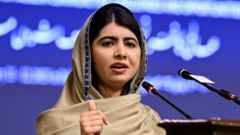
Malala Yousafzai has taken a stand against the Taliban's oppressive measures towards women and girls in Afghanistan, describing their policies as nothing short of "gender apartheid." Speaking at an international summit focused on girls' education in Muslim communities, held in Islamabad, Yousafzai emphasized that the Taliban does not recognize women as deserving of basic human rights. She stated, "Simply put, the Taliban in Afghanistan do not see women as human beings," underlining the need for Muslim leaders to challenge the group's interpretations of Islamic values that justify the prohibition of female education and employment. Given her own traumatic experiences as a young girl targeted for advocating girls' rights, Malala implored attendees to recognize the disastrous implications of these policies.Now 27 and returned to her home country, Yousafzai has experienced only brief visits since her 2012 assassination attempt. During her speech, she expressed her joy at being back but lamented the situation facing Afghan women and girls who are subjected to violence and repression by the Taliban. She condemned the group for imposing severe punishments on those who resist their unjust laws, framing their actions as actions that go against the essence of Islamic faith.Despite the invitation extended to Taliban leaders by the Pakistan government and the Muslim World League to attend the summit, they failed to respond or attend. The Taliban insist that they uphold women's rights by adhering to their interpretation of Afghan culture and Islamic law. However, the reality on the ground paints a different picture — Afghanistan remains the only nation where women and girls are barred from secondary and higher education, affecting more than one and a half million.In a call to arms, Yousafzai highlighted that the fight for girls' education extends beyond Afghanistan, with crises in regions like Gaza, Yemen, and Sudan severely impacting educational opportunities. She urged conference attendees to hold accountable those responsible for the flagrant violations of girls' rights to education. Yousafzai closed by emphasizing the importance of standing up against these injustices for the sake of future generations, reiterating that educating girls is crucial for building a sustainable future.