In brief
The Palestinian olive harvest, a fundamental part of the community's economy, faces increasing threats from violence and restrictions by Israeli settlers and military forces, raising concerns for thousands of families.
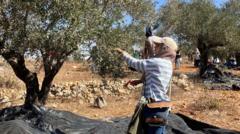
In the West Bank, the olive harvest, which has sustained Palestinian livelihoods for generations, is now marred by violence and discord. Recent reports indicate a disturbing trend of escalation, as incidents of Israeli settlers attacking farmers during the olive harvest season have increased dramatically. This October, a tragic episode unfolded when Hanan Abu Salameh, a 59-year-old grandmother, was shot and killed by an Israeli soldier while picking olives on her family’s land near Faqqua.Despite having coordinated their harvest with the Israel Defense Forces (IDF), family members witnessed her being shot and felt hopeless about justice being served. Hanan's death is tragically one of many as the olive harvest season becomes fraught with danger. Organised attacks by settlers to sabotage the harvest and the physical aggression from Israeli security forces are putting numerous farmers at risk.Omar Tanatara, a farmer from Umm Safa, shared the frustrations facing Palestinian farmers. "Last year, we could barely harvest anything," he recounted. "The army came, destroyed what we had gathered, and ordered us to leave." Stories emerged of villagers being shot at and their trees deliberately felled, compounding the struggle for olive farmers during this critical time.Even when accompanied by local and international activists, Palestinian farmers remain vulnerable. Zuraya Hadad, an Israeli peace activist, recounted the violence she faced while aiding farmers during the harvest. “Being there doesn’t guarantee safety for anyone,” she lamented, as activists try to deter potential aggressors but often find it ineffective.The olive tree symbolizes life and resilience for many Palestinian families, yet they confront a hostile environment that impacts economic stability. According to UN reports, 2023 saw over 96 square kilometers of olive groves remain uncultivated due to Israeli-imposed restrictions. With the olive industry representing over $70 million annually for Palestinian farmers, violence and disruption threaten livelihoods.Factory owner Abd al-Rahman Khalifa pointed to dismal prospects: “Income has fallen dramatically. My brother-in-law was injured while trying to harvest his own olives. The attack left many too scared to work their land.” On the other side of the conflict, Israeli settler outposts continue to expand, emboldened by supportive political figures who often promote aggressive policies against Palestinian land use. Minister Itamar Ben-Gvir's endorsement of the settlers’ actions perpetuates a cycle of violence, depriving Palestinians of their agricultural heritage that has persisted for generations.As this year's olive harvest momentarily resumes, many farmers remain anxious. The ongoing threat of violence looms large in the backdrop of a tradition that has been a cornerstone of their culture and economic survival for centuries. The olive tree, a cherished symbol, now stands as a testament to the struggle between heritage and adversity.