
In brief
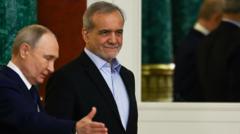
During a recent visit to Moscow, Iranian President Masoud Pezeshkian and Russian President Vladimir Putin signed a 20-year strategic partnership treaty, strengthening military ties and promising enhanced energy cooperation. The agreement highlights mutual commitment to address security threats and proposes the construction of new nuclear power units in Iran, along with a major gas pipeline project.
Russia and Iran have embarked on a path of strengthened military cooperation, marking a notable development in their bilateral relations. This collaboration was solidified during President Masoud Pezeshkian's official visit to Moscow, culminating in the signing of a 20-year "strategic partnership" treaty. The agreement encompasses a wide array of sectors, including defense, technology, energy, and trade, underscoring a deepening collaboration between the two nations.The treaty signifies a pivotal shift in their relationship, with both countries pledging to consult and cooperate in addressing military and security threats. They also expressed intentions to engage in joint military exercises on each other's territories and beyond. The Iranian President remarked that the signing of this accord indicates the commencement of a new chapter in Russia-Iran relations.Iran has already established itself as a key supplier of drones to Russia and is reported by Western intelligence to provide ballistic missiles as well. The strategic partnership could further enhance trade, particularly in the energy sector. Significant discussions were also held regarding the possibility of Russia constructing new nuclear power units in Iran, a move that illustrates the growing energy ties between the two nations.Additionally, in light of the EU reducing imports from Russia following the onset of the war in Ukraine, Moscow is actively seeking alternative markets. Russian Energy Minister Sergei Tsivilev indicated that the two countries are in negotiations to establish a gas pipeline from Russia to Iran, which would traverse Azerbaijan territory. If realized, this project could enable Russia to supply up to 55 billion cubic meters of gas annually to Iran.Overall, the newly formalized partnership represents not only a strategic alignment in military capabilities but also a critical economic collaboration that could reshape regional dynamics and energy flows in the years to come.

