In brief
Following Georgia's disputed election results favoring the ruling Georgian Dream party, US President Joe Biden and EU officials have called for investigations into reported electoral violations. Protests erupt as claims of intimidation and ballot-stuffing surface, intensifying scrutiny on the government's alignment with Russia and prompting strong international backlash.
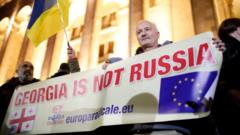
As the dust settles on a contentious election in Georgia, President Joe Biden has voiced serious concerns regarding the integrity of the vote and the government's adherence to democratic principles. Responding to widespread reports of electoral malpractices during the recent polls, Biden urged the Georgian government to address both domestic grievances and international apprehensions regarding the legitimacy of their electoral process.The election, held on Saturday, concluded with the Georgian Dream party claiming a significant victory, having reportedly secured almost 54% of the votes. This claim has drawn skepticism from both the European Union and local opposition groups, who have decried the entire electoral process as fundamentally flawed. Georgia's President Salome Zourabichvili publicly rejected the results, indicating the influence of a "Russian special operation" in skewing the electoral outcome. Zourabichvili has rallied opposition parties to contest what they describe as a "stolen" election, highlighting fears of an increasingly authoritarian regime.The European Union has responded by freezing Georgia’s bid for membership and labeling the country’s recent political developments as "deeply worrying." European Commission President Ursula von der Leyen demanded a prompt and transparent investigation into the unfolding situation, urging that the rights of Georgians to safe and fair elections be guaranteed.Georgian Dream's leadership has attempted to dismiss the criticism, with Prime Minister Irakli Kobakhidze downplaying the allegations of fraud by asserting that only isolated incidents occurred on election day. The Prime Minister’s narrative, however, has been contradicted by countless testimonies from opposition groups and citizen observers, who report incidents of violence, coercion, vote-buying, and ballot-stuffing in multiple polling stations. In stark contrast, Hungarian Prime Minister Viktor Orban’s visit to Georgia has attracted criticism from his EU counterparts. Orban's remarks celebrating the election's fairness have been met with backlash, including a joint statement from 13 EU foreign ministers affirming that the elections could not be considered fair.This political turmoil has prompted mass protests across Georgia, with demonstrations erupting in response to the controversial election. Groups like the monitoring organization "My Vote" reported extensive electoral violations, including coercive tactics aimed at influencing voter behavior and improper voter authentication procedures.With the election commission aiming to conduct a recount in a limited number of polling places, opposition leaders and monitoring groups remain skeptical about the implications of these steps, stressing that the established mechanisms remain under the authoritarian grip of the ruling party. The tumultuous political climate raises significant questions about Georgia's democratic future and its longstanding aspirations to strengthen ties with the West amid Russian pressures. As the world watches, the hope remains for a transparent process that can restore faith in Georgia's electoral integrity, allowing its citizens to partake in genuine political expression.