In brief
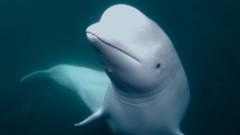
Dr. Olga Shpak's revelations about the beluga whale Hvaldimir, once thought to be a "spy," highlight the species' escape from military training and its tragic end. Despite assumptions of espionage, Dr. Shpak argues the whale fled due to its spirited nature. This story emphasizes not only the mystery surrounding Hvaldimir's life but also the broader implications of marine exploitation by the military.
The enigma of the beluga whale known as Hvaldimir, which made headlines in 2019 after it approached Norwegian fishermen while wearing a harness, has taken a fascinating turn. Marine biologist Dr. Olga Shpak has narrated her belief that the beluga was indeed under military supervision in Russia and escaped from a naval base, though she dismisses the notion that it was a spy.Dr. Shpak, an expert in marine mammalogy with experience from the Russian marine community, asserts that the whale was meant to be a guard animal and fled due to its “hooligan” disposition. This perspective is shared in the BBC documentary titled “Secrets of the Spy Whale”, which delves into the captivating story of Hvaldimir.The whale's peculiar behavior began five years ago when it was seen alongside fishermen near Norway’s northern coast, signaling distress and seeking human interaction. This prompted suspicions about its origins, especially since the harness it wore bore the words “Equipment St Petersburg.” Fisherman Joar Hesten described how Hvaldimir's behavior suggested it was conditioned to identify and interact with objects as targets.In Norway, locals were charmed by Hvaldimir’s antics. The whale would nudge cameras and returned a lost mobile phone to a tourist, endearing itself to the public. Researchers noted its inability to catch fish likely stemmed from years of captivity, highlighting how domesticated creatures struggle to adapt after rehabilitation.Upon investigation, sources in the Russian marine mammal community confirmed they were missing a beluga known as Andruha, whom they recognized as Hvaldimir. Dr. Shpak explained that he was first captured in the Sea of Okhotsk and was being trained in a military program designed to utilize marine mammals for defense tasks. The animal, previously popular with trainers for its intelligence, was reportedly spirited enough to avoid confinement and escape while in open waters.Despite Russia's long-standing history of employing marine mammals for military operations, Moscow has not addressed the claims about Hvaldimir. The elusive whale journeyed along Norway’s coast, eventually spotted near Sweden before its tragic demise in September 2024. The official report indicated the cause of death was unrelated to human activity; a stick had lodged in its mouth, marking a poignant end to a troubling tale.As the story of Hvaldimir concludes, it leaves us reflecting on the intricate dynamics of wildlife interactions with human militaries and the impact of captivity on marine life.