In brief
The announcement of widespread tariffs by President Trump has led to international backlash, as countries brace for trade conflicts.
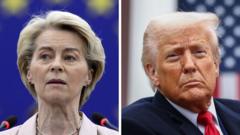
In a sweeping move, US President Donald Trump has imposed new tariffs on all imports, leading to a wave of criticism from global leaders who fear significant damage to the world economy. European Commission President Ursula von der Leyen described these tariffs as a "major blow," emphasizing potential consequences for millions around the globe.Trump announced a universal 10% tariff on imports effective from April 5, with additional tariffs striking around 60 countries from April 9. Other nations quickly joined in vocal opposition, including China, which warned of "resolute countermeasures" to defend its trade interests. China's response follows a staggering 34% levy applied to its goods, compounding the strain on its economy. Speaking on the situation, von der Leyen highlighted the adverse effects on vulnerable countries, many of which will face particularly harsh tariffs imposed by the US. She pledged a united front from Europe, stating that the EU would prepare counteractions should negotiations prove ineffective. Italian Prime Minister Giorgia Meloni acknowledged Trump's policies were "wrong," yet indicated her willingness to seek a resolution without escalating a trade war.France’s position was similarly critical, with President Emmanuel Macron labeling the tariffs as an "unfounded decision" that would damage economies on both sides of the Atlantic. Poland estimated losses could escalate to over 10 billion zloty, while Hungary deemed the response inadequate from the EU to prevent fallout with the US.The announcements triggered further international responses. Countries like South Korea and Japan expressed regret, with South Korea's acting President deeming a global trade war as an inescapable reality. Meanwhile, Taiwan piled on criticism, calling the tariffs "highly unreasonable," while Vietnam's government began forming a task force to navigate the tariffs' implications.Canada, unharmed by the immediate tariffs, is still bracing for indirect effects, with Prime Minister Mark Carney asserting that these measures "fundamentally change the global trading system." In Brazil, legislators rapidly passed the Economic Reciprocity Law to balance the trade scales in response to Trump’s tariffs, demonstrating proactive measures being adopted across Latin America.Moreover, the US Treasury Secretary advised caution against retaliatory measures, hinting at potential escalation should countries decide to counterstrike. Amidst a complex web of trade relations, Trump's tariffs signal an important turning point in global trade dynamics, one that leaders around the world continue to address.