In brief
During a summit in Islamabad, Malala Yousafzai criticized the Taliban's treatment of women and girls, labeling it a form of "gender apartheid". She called on Islamic leaders to demand justice and education access for women in Afghanistan.
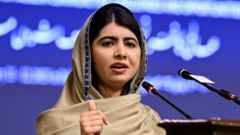
Malala Yousafzai has delivered a powerful message at a recent international summit, urging Muslim leaders to confront the repressive Taliban government in Afghanistan regarding its discriminatory policies against women and girls. The Nobel Peace Prize laureate stated, "Simply put, the Taliban in Afghanistan do not see women as human beings," while addressing a conference on girls' education in Islamic nations in Pakistan.Yousafzai, who was targeted by a Taliban gunman in 2012 due to her advocacy for girls’ education, explicitly criticized the Taliban's approach, asserting that there is "nothing Islamic" about prohibiting women from receiving education and employment opportunities. She expressed her joy at returning to her home country, Islamabad, but also condemned the current state of gender rights under Taliban rule.Describing the situation for women and girls in Afghanistan as a "system of gender apartheid," she highlighted the violent repercussions faced by those who defy the Taliban's oppressive regulations, such as being beaten and detained. She emphasized that the government attempts to justify its actions through cultural and religious means while contradicting the foundational principles of the faith.Despite attempts to engage the Taliban in dialogue by sending them invitations to the summit hosted by the Organization of Islamic Cooperation, the Pakistani government, and the Muslim World League, the Taliban officials did not attend. Since regaining power in 2021, the Taliban government has not been officially recognized by any foreign entity, with many Western nations insisting that women's rights must be respected for any change in diplomatic status.Yousafzai noted that Afghanistan is the only nation globally where women and girls are barred from secondary and higher education, leaving approximately 1.5 million girls without access to schooling. She referenced previous Taliban promises to allow girls back into education when they deemed the curriculum "Islamic," but these promises remain unfulfilled. In a recent decision, the Taliban also prohibited women from training as midwives and nurses, effectively closing off avenues for their further education.Highlighting broader issues of girls' education, Yousafzai pointed out crises in other regions, including Gaza, Yemen, and Sudan, warning that these circumstances are creating serious risks for the futures of young girls worldwide. She urged attendees to "call out the worst violations" against girls' education rights and to stand in solidarity with those whose education is threatened by conflict and oppression.