
In brief
Following the tragic Jeju Air crash that claimed 179 lives, survivors and bereaved families in South Korea are enduring harmful online hate, mischaracterization, and insensitivity, alongside navigating their immense grief. Experts highlight socioeconomic pressures fueling this culture of online vitriol, as victims confront unfounded accusations and harsh public sentiments.
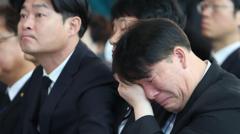
In December 2022, a devastating plane crash in South Korea claimed the lives of 179 passengers and left survivors grappling with immense grief and public scrutiny. Park Guen-woo, a 22-year-old who lost both parents in the Jeju Air tragedy, is among those who uniquely experienced the trauma of their loss compounded by a wave of online abuse. Instead of receiving support, bereaved families encountered a barrage of vicious comments questioning their experiences and categorizing them as "fake victims."The Jeju Air flight, returning from Bangkok, Thailand, crash-landed on December 29 at Muan International Airport, leading to immediate investigations and arrests of individuals issuing derogatory comments online. Authorities have identified eight individuals responsible for propagating toxicity, with over 427 posts being flagged for removal. Many of the comments reflect a culture saturated with economic jealousy and social competition, leading to a disturbing trend where those in mourning are unfairly blamed and mocked.Past disasters in South Korea have seen bereaved families targeted in similar manners. Notably, families affected by the 2014 Sewol ferry disaster faced hate speech as well, often due to perceived financial gains from government compensation. Koo Jeong-woo, a professor of sociology, notes a pattern where individuals experiencing hardship often lash out at those who seem to receive unfair treatment, exacerbated by South Korea's deeply rooted competitive society.For Park, the online vitriol stings deeply as he confronts the void left by his family's sudden loss. "Even if compensation for the accident comes in, how could we possibly feel like recklessly spending it when it is the price of our loved ones' lives?" Park articulated. With feelings of shame associated with receiving help, he emphasized that the families are not seeking financial gain from their tragedy.Unfortunately, the political climate surrounding the crash further complicates matters, as blame has been directed toward opposing political factions. Misinformation about the crash’s cause emerged almost immediately, with many unfairly attributing responsibility to the opposition Democratic Party despite no evidence supporting such claims. Park Han-shin, who lost his brother in the crash, lamented the deeply partisan reactions, highlighting how his own experiences of loss have led to unfounded allegations against him personally.As this wave of hate continues, psychologists stress the importance of fostering online empathy and solidarity. Joshua Uyheng, a psychologist in the Philippines examining online hate, contends that societal perceptions of zero-sum game dynamics often lead to misplaced resentment directed toward grieving families.In response to the growing phenomenon of online abuse, experts advocate for stricter regulations on hate speech in social media, alongside improved reporting mechanisms for affected users. By shifting the mental framing of shared identities and empathy, communities can work toward mutual understanding instead of adversarial perceptions.Addressing the intersection of shared human tragedies, mental health, and social behavior, the call for compassion plays a critical role in healing from communal losses—placing survivors and bereaved families at the heart of the narrative, rather than targets of cynicism.


