In brief
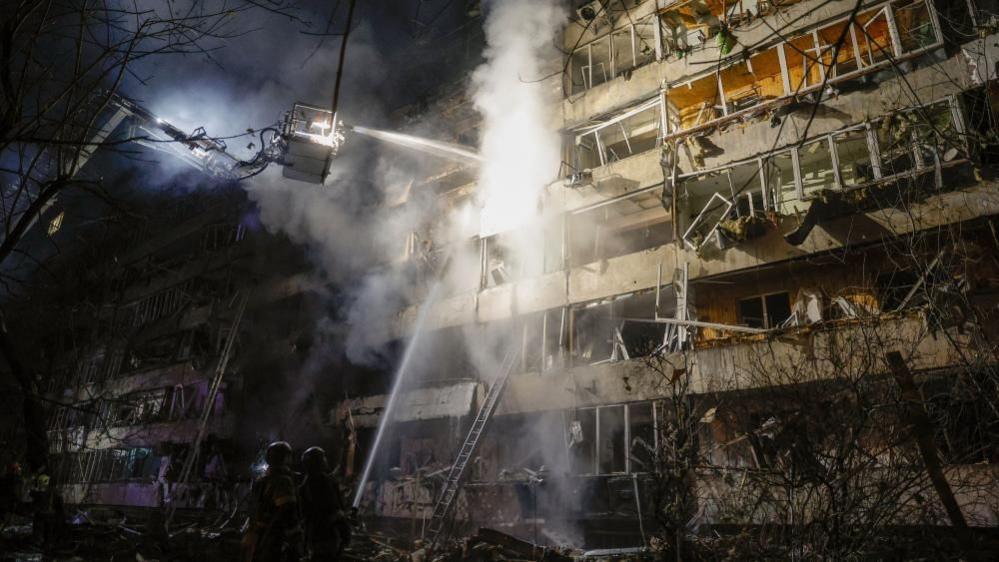
In a recent overnight assault, Russian missiles and drones destroyed key energy facilities in Kyiv and Kharkiv, leaving six hundred thousand people without electricity. President Zelensky warned of the impact on civilians and urged a reciprocal halt to strikes on Russian power sites, despite Trump’s claimed ceasefire. The attack exposes the fragile link between military conflict, energy infrastructure, and climate‑action plans, raising concerns that further grid damage could force a return to fossil‑fuel baseloads. The crisis stresses the urgent need for resilient, low‑carbon energy systems that can withstand geopolitical shocks.
Russian attacks that blew out power for 600,000 Ukrainians expose a stark reality about the intersection of war, energy security, and climate resilience.
Since the latest wave of missile and drone strikes, President Volodymyr Zelensky has confirmed that critical energy infrastructure in Kyiv and the northeastern city of Kharkiv has been hit, plunging mass numbers of civilians into darkness.
The devastation goes beyond human suffering. Power plants, transmission lines, and substations that once fed a grid increasingly reliant on renewables are now offline, setting back years of progress toward carbon‑neutrality and forcing the country to consider costly, short‑term fossil‑fuel use to restore supply.
In response, Zelensky urged collateral military silence on Russian oil refineries and energy sites if Moscow respected a ceasefire, a plea that faces strong counter‑arguments. Russian Foreign Minister Sergey Lavrov demanded that any ceasefire be accompanied by a European weapons surge, underscoring the political complexity that hampers swift energy recovery.
The conflict’s clear implication for climate action is that war can erode the stability of clean‑energy infrastructure, temporarily erasing gains made in emissions reductions and potentially inducing a rebound in greenhouse gases. Experts warn that restoration efforts must prioritize resilient, modular renewable hubs and robust smart‑grid technologies to mitigate future vulnerabilities.
As the war continues, the international community faces a dual challenge: supporting Ukraine’s immediate power needs while safeguarding the nation’s broader climate trajectory. Only a coordinated approach, integrating security, humanitarian aid, and green‑energy transition, will prevent a cycle of conflict‑driven emissions and ensure a sustainable future for the region.