
In brief
The introduction of a steep 50% import tariff by President Trump on Lesotho's textiles has sparked concern over the country's economic stability and prospects under the African Growth and Opportunity Act, with fears it may signal the end of this vital trade agreement.
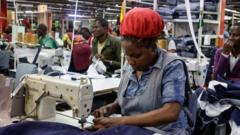
Lesotho's textile workers are bracing for a challenging future with the news of President Donald Trump's impending 50% import tariff on the country's garments set to take effect. With this development, the prospects for Lesotho's thriving textile industry, which employs around 2,000 individuals under Afri-Expo Textiles, look increasingly grim. This situation marks a severe blow to the nation's economic backbone and calls into question the validity of the African Growth and Opportunity Act (Agoa), a significant pillar of US-Africa trade policy for the past 25 years.Agoa's mission has been to support African industrialisation and reduce poverty through duty-free access for several goods exported to the US. Yet, with Trump's recent announcement, the future of this vital agreement lies in jeopardy, as tariffs for various African nations have been set from 10% to an alarming 50% for Lesotho.While Lesotho grapples with uncertainty, other countries like South Africa fear that these new tariffs could effectively nullify Agoa's benefits. In contrast, Kenya remains optimistic, claiming that its lesser impact from tariffs compared to nations such as Sri Lanka could preserve its textile competitiveness in the US market.The potential termination of Agoa would have sweeping ramifications for the African economy, especially for nations reliant on access to the US market for textiles, cocoa, wine, and other exports. Currently, Agoa has facilitated $47.5 billion in trade between the US and sub-Saharan African countries, and the mission of reviving African economy through trade might not see the light of day in current Congressional dynamics.Experts warn that a complete collapse of Agoa could lead to dramatic losses, particularly for Lesotho, where predictions show a 1% decline in GDP within two years. There is a consensus among analysts that, coupled with the reduced American influence in African matters—with China increasing its clout—this situation poses a formidable challenge for the continent hoping to forge a path toward economic self-sufficiency.Looking ahead, if Agoa falters and Lesotho's garment industry collapses under the weight of tariffs, African countries may be forced to bolster intra-continental trade relations, fostering new partnerships and promoting self-reliance to stimulate economic growth, and avoid being caught in the complexities of international trading politics.

