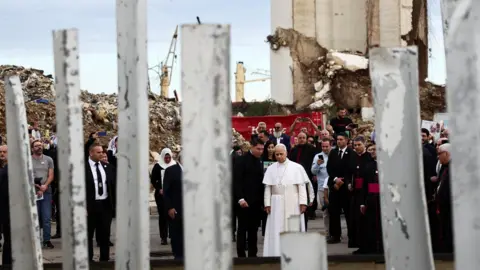
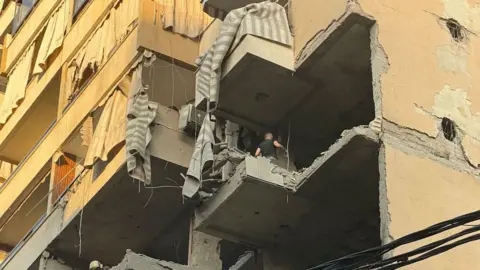
The Roman architectural marvels at Baalbek, dating back over two thousand years, have always been significant cultural landmarks. Graham Philip, an archaeology professor at Durham University, emphasized the severity of potential losses, stating, "You couldn't replace it if someone bombed it. It would be a crime." The ongoing airstrikes, which have affected thousands of areas in southern Lebanon, the capital Beirut, and the Bekaa Valley, have now approached these historic sites, raising concerns about their future.
As Israeli military operations extend, evacuations have been ordered near Baalbek's ruins. Videos have documented scenes of destruction near these ancient structures, though no confirmed damage has been reported yet. Local archaeologists, such as Joanne Farchakh Bajjaly, have voiced their fears that military operations are encroaching dangerously close to these irreplaceable sites without sufficient justification.
Despite Israel's assertions that military targets do not include historical sites, the proximity of airstrikes creates an imminent risk for cultural heritage. Disturbingly, some citizens fleeing the bombardments have sought shelter at the ruins, underscoring the locals' tragic belief in the sanctity of these ancient spaces as safe havens. Archaeologists warn that the ongoing conflict not only jeopardizes the physical structures but also represents a cultural loss for Lebanon and the world.
While experts like Erez Ben-Yosef acknowledge Israel’s intentions to protect heritage sites, the peril remains that artillery could unintentionally strike these invaluable locations. Comparatively, a recent UNESCO survey revealed significant damage to cultural sites in Gaza during previous conflicts, illustrating the broader implications of warfare on heritage preservation.
As tensions escalate and the risk of historical loss looms, the plight of Lebanon's ancient ruins stands as a poignant reminder of the importance of safeguarding our shared human history amidst conflict.
As Israeli military operations extend, evacuations have been ordered near Baalbek's ruins. Videos have documented scenes of destruction near these ancient structures, though no confirmed damage has been reported yet. Local archaeologists, such as Joanne Farchakh Bajjaly, have voiced their fears that military operations are encroaching dangerously close to these irreplaceable sites without sufficient justification.
Despite Israel's assertions that military targets do not include historical sites, the proximity of airstrikes creates an imminent risk for cultural heritage. Disturbingly, some citizens fleeing the bombardments have sought shelter at the ruins, underscoring the locals' tragic belief in the sanctity of these ancient spaces as safe havens. Archaeologists warn that the ongoing conflict not only jeopardizes the physical structures but also represents a cultural loss for Lebanon and the world.
While experts like Erez Ben-Yosef acknowledge Israel’s intentions to protect heritage sites, the peril remains that artillery could unintentionally strike these invaluable locations. Comparatively, a recent UNESCO survey revealed significant damage to cultural sites in Gaza during previous conflicts, illustrating the broader implications of warfare on heritage preservation.
As tensions escalate and the risk of historical loss looms, the plight of Lebanon's ancient ruins stands as a poignant reminder of the importance of safeguarding our shared human history amidst conflict.