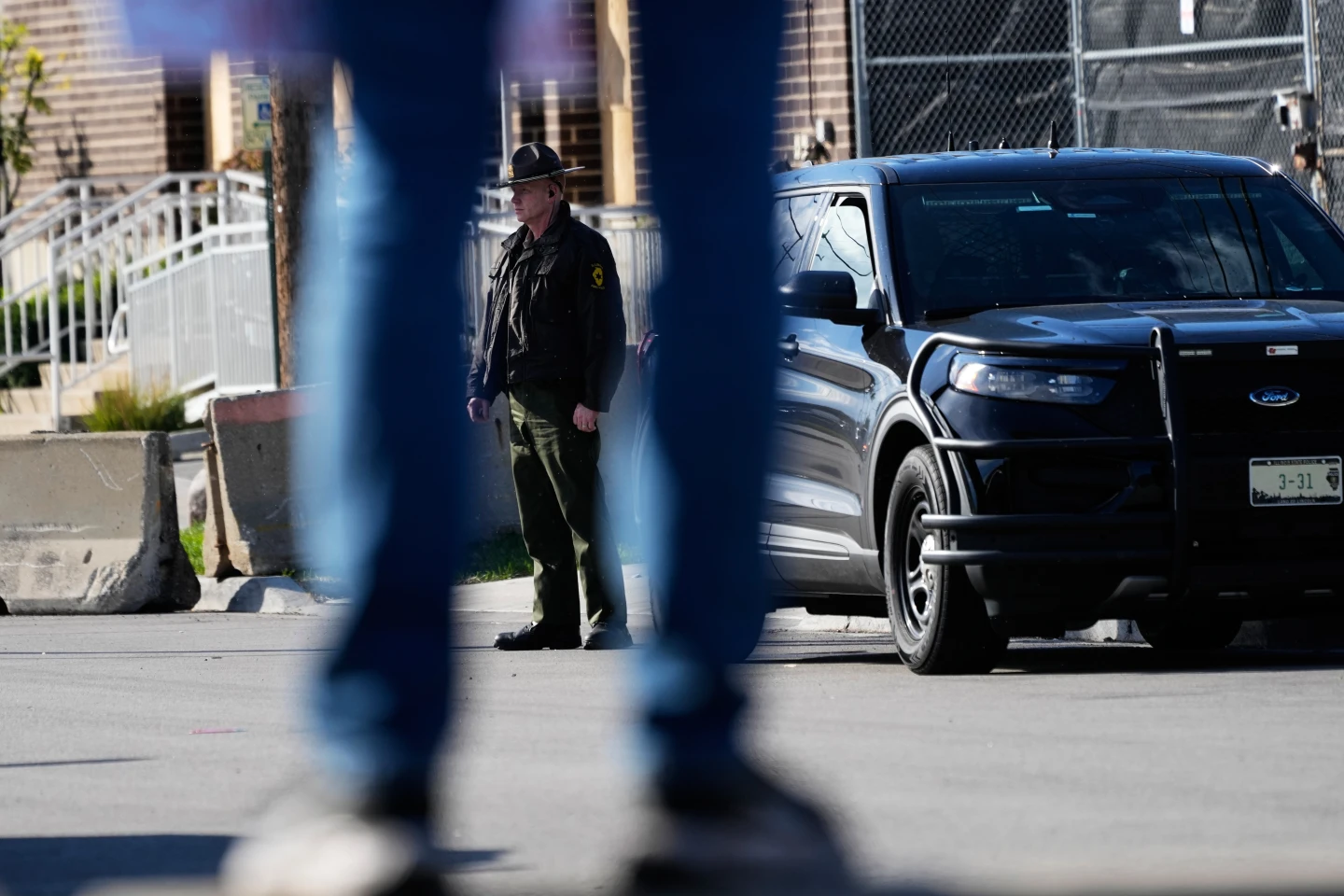
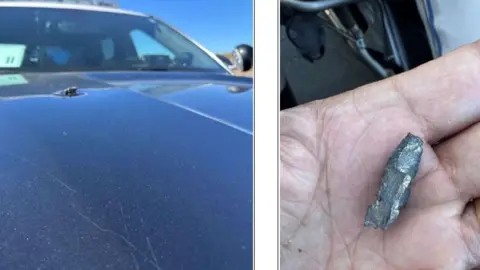
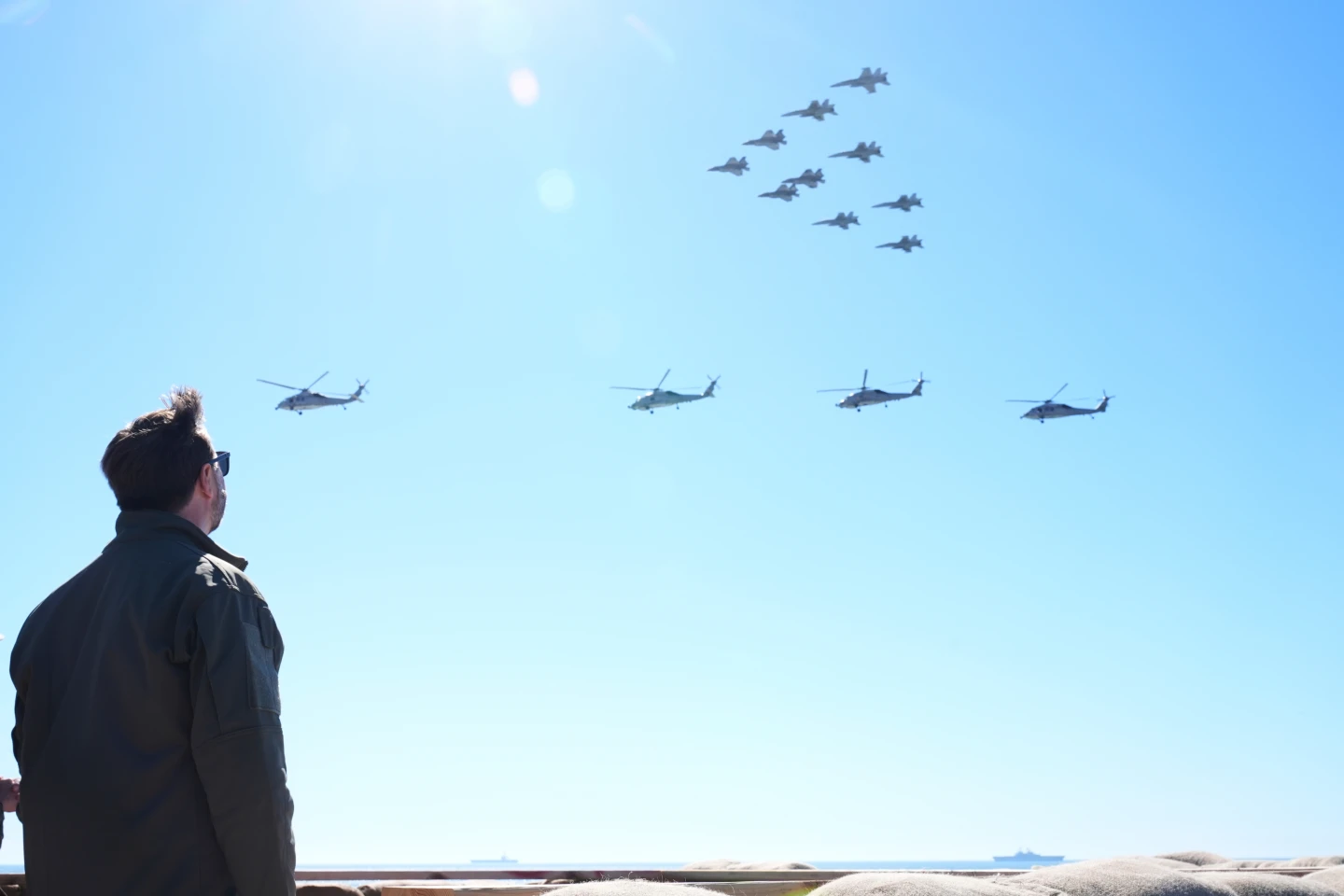
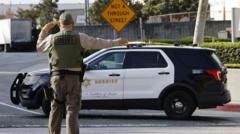
LOS ANGELES — A mishap during a live fire demonstration over Camp Pendleton last October caused artillery shrapnel to rain down on Interstate 5, impacting two California Highway Patrol vehicles. The event, part of the Marine Corps’ celebration of its 250th anniversary, has drawn conclusions from a Marine investigation that declared the incident a 'one in a million' malfunction.
The report, released just before the end of the year, details that an M795 high explosive round detonated prematurely at an altitude of approximately 1,480 feet. Investigators were unable to pinpoint an exact cause, acknowledging that such an occurrence is 'beyond reasonable expectations.' The investigation also cleared Marine Corps members of any negligence.
In the wake of this incident, California’s congressional delegation expressed concerns by sending letters to Defense Secretary Pete Hegseth, questioning the decision to conduct live fire exercises over a heavily trafficked freeway without adequate safety protocols in place.
Governor Gavin Newsom criticized the military action, framing the demonstration as an intimidating spectacle amid political tensions with the Trump administration, particularly as protests were planned against Trump's remarks and policies. “Firing live rounds over a busy highway isn’t just wrong — it’s dangerous,” Newsom stated, emphasizing the risks presented to civilians.
The exercise involved firing a planned 60 rounds, which were to be dispersed near the coastal freeway; however, the first round malfunctioned causing the incident. After the misfire, military officials halted any further firing, clearly indicating the seriousness of the matter.
Newsom's office responded positively to the investigation, commending the Marines for their thoroughness but slammed the actions that led to the incident as reckless and unnecessary. Public safety officials noted that while live fire training is standard, it traditionally occurs within designated ranges rather than over populated roads.
This incident surfaces a broader conversation about military protocols in civilian areas, calling for an evaluation of safety measures during military exhibitions. It also underscores the ongoing friction between state leaders and federal authorities concerning military responsibilities and public safety.