In brief
As Ghana approaches its presidential election, the tale of Nathaniel Qainoo, a former accountant turned mechanic, sheds light on the struggles faced by the youth, who feel disillusioned by an economy in crisis.
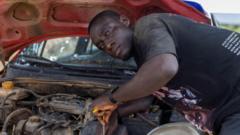
In the small town of Kasoa, just outside Accra, Nathaniel Qainoo, a 29-year-old mechanic, embodies the reality of many young Ghanaians grappling with a struggling economy. With a degree in accounting, Qainoo had hoped to build a career in finance, but after five years of job hunting with no success, he found himself trading his calculator for tools to repair taxis. Under the mango tree, he shared his sentiments of hardship, as his home country navigates an economic crisis that began in 2022.During that turbulent year, Ghana defaulted on debt repayments and was downgraded to "junk status," leading to a staggering inflation rate of 54%. The cedi has plummeted in value by 70% since 2015, and a $3 billion bailout from the International Monetary Fund (IMF) has brought little relief for Ghanaians, particularly those reliant on government bonds. As Qainoo puts it, he no longer sees a future in voting for the upcoming presidential elections, often contemplating a move to North America or Europe for a better lifestyle.In Ghana, where nearly 40% of the population is made up of youth, the job market appears grim with an unemployment rate of 14%. Overwhelmed by economic struggles, many young people are disillusioned and hope to emigrate. As a result, economic issues have taken center stage in the election campaign. The two leading candidates, former President John Mahama, and current Vice President Mahamudu Bawumia, are vying to replace President Nana Akufo-Addo, who is stepping down. Mahama has been campaigning on promises to "reset" the economy. He maintains that during his previous term (2014-2017), the economy did not crash despite difficulties, and he plans to create night-time jobs to transform Ghana into a "24-hour economy." However, skepticism surrounds his allegations of corruption during his prior term.Bawumia, on the other hand, seeks to leverage his experience as head of the government's economic management team, despite criticism for the failing economy. He presents himself as a champion for a "digital economy," intending to equip one million young individuals with skills and boost job opportunities. His campaign slogan, "It is possible," is emblazoned on a blue bus he travels on, as he argues that recovering the economy is achievable. Political analysts argue that Bawumia’s shift to a digital focus might appeal to tech-savvy voters seeking progress.As public discontent swirls around the candidates’ promises, both Mahama and Bawumia face the challenge of delivering on ambitious pledges while navigating the constraints of an IMF-backed economic recovery plan. Polls suggest a tight race, with Mahama leading slightly. However, competing narratives will determine not just the election outcome, but the future direction of a nation urgently seeking solutions to its economic malaise.