The head of the Kennedy Center in Washington, DC, has demanded $1 million (£740,000) in damages from musician Chuck Redd who canceled a concert after President Donald Trump's name was added to the venue.
Chuck Redd called off his Christmas Eve performance, which he has hosted annually since 2006, citing a vote by the board to rename the site the Trump Kennedy Center.
In his letter, Richard Grenell stated that the cancellation was a political stunt and has cost us considerably. Redd did not immediately respond to a request for comment.
Shortly after taking office, Trump fired several of the board members and replaced them with allies, leading to the vote that made Trump chairman of the board.
Grenell, who is the president of the Trump Kennedy Center, expressed in his letter that Redd’s no-show was indicative of classic intolerance and was detrimental to a non-profit arts institution. He claimed that poor ticket sales, lack of donor support, and the last-minute cancellation resulted in significant financial loss.
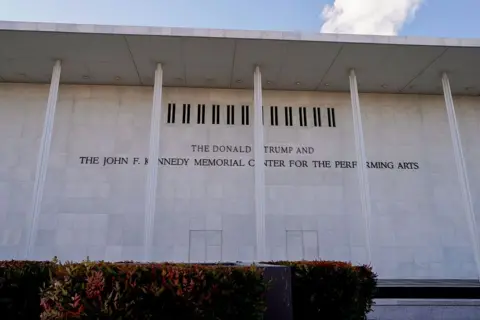
Last week, the White House announced the board's unanimous decision to rename the cultural institution as The Donald J Trump and John F Kennedy Memorial Center for the Performing Arts. Soon after, crews were seen etching Trump’s name on the building’s façade, with the venue's website and social media accounts also undergoing rebranding.
This renaming initiative faced backlash from Democrats, several artists, and members of the Kennedy family, who criticized the move. Redd, a drummer and vibraphone player, explained to the Associated Press that upon witnessing the name change on the Kennedy Center's website, he decided to cancel the concert.
Congresswoman Joyce Beatty, a Democrat from Ohio, recently filed a lawsuit aiming to remove Trump's name from the center, arguing that the original name was established by law in 1964 and should thus require an act of Congress to alter. She indicated that her objections during a meeting regarding the name change were muted, prompting her to take legal action.
Originally conceived in the 1950s, plans for a national performing arts center were realized after President John F. Kennedy was assassinated in 1963, with Congress allocating it as a living memorial to him.