
In brief
"During his meeting with President Trump, Ishiba effectively avoided confrontation while promoting economic cooperation and reaffirming Japan's commitment to long-standing alliances, showcasing a new era in Japan-US relations."
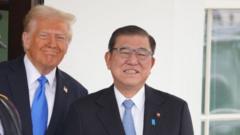
Japanese Prime Minister Shigeru Ishiba's recent engagement with President Donald Trump at the White House signifies a strategic maneuver to reinforce Japan's role as a key ally in an increasingly tumultuous Asia-Pacific landscape. Ishiba entered the discussion well-prepared, having conducted extensive "study sessions" with advisors and insights from former Prime Minister Fumio Kishida, as well as the late Shinzo Abe's widow, solidifying his diplomatic approach.The meeting, notable for its absence of the usual controversies surrounding Trump, revealed both leaders' interest in fostering economic ties and security collaboration. As the top foreign investor in the US, Japan's economic presence continues to grow, and Ishiba announced ambitious plans to heighten investments to $1 trillion, aligning well with Trump's focus on bolstering American industry—especially in light of an increase in Japanese car manufacturing and expanded imports of US liquefied natural gas (LNG).Although the possibility of tariffs hovered over the meeting, they did not dominate the discourse. Ishiba's diplomatic agenda was significantly shaped by the need for reassurance following Japan's recent political struggles, as his ruling coalition faced challenges after the October elections.Guided by a straightforward communication strategy, Ishiba's team advised him to prioritize clarity and conciseness to engage effectively with Trump. This tactic paid off, with Ishiba successfully delegating contentious topics like the proposed Gaza takeover to maintain focus on trade and defense dialogues, reassuring Tokyo’s support for a two-state solution.In an increasingly complex global context, maintaining a fine balance with Beijing remains crucial for Japan, especially given its extensive trade relations with China. Japan's commitment to defense has been made clear, particularly with the military expansion plans announced to counter perceived threats from both China and North Korea.Overall, the Ishiba-Trump meeting appears to herald a renewed partnership founded on mutual respect and economic collaboration, positioning Japan as a reliable ally while carefully sidestepping potential conflicts in a rapidly shifting geopolitical climate.

