In brief
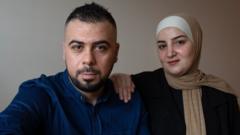
Douna Haj Ahmed learns about the traumatic experiences of her husband, Abdullah Al Nofal, who was a detainee in the brutal Al-Khatib prison during the Syrian civil war. As he begins to open up about his suffering, the couple emphasizes the importance of sharing their story to bring attention to the plight of others who have not survived to tell theirs.
In early December, in London, Douna Haj Ahmed—a Syrian refugee—watched in disbelief as news showed former prisoners fleeing Syria's brutal security forces following the fall of President Bashar al-Assad. Seated beside her, Abdullah Al Nofal, her husband, suddenly revealed, "This is where I was arrested, this is the place." It was the first time Douna learned the full story of Abdullah's harrowing experience in Al-Khatib prison, an infamous facility notorious for its brutal treatment of detainees.Douna reflects, "It was a turning point. I saw him weak. I saw him crying." Abdullah found a measure of closure in this moment, where for the first time, he felt safe enough to unearth buried memories that had haunted him since his detention began years earlier.Abdullah, now 36, was working for the International Committee of the Red Cross in Damascus when, in July 2013, he was arrested at a checkpoint. A participant in peaceful protests against the regime in 2011, he later distanced himself as violence escalated. His experience in detention was chaotic and frightening; he endured solitary confinement, beatings, and witnessed fellow detainees suffering unimaginable horrors.During his 12 days at Al-Khatib, Abdullah heard the screams of tortured prisoners and saw fellow inmates with injuries so severe they could not stand. "You feel so lonely. It was so dark" he recounts, highlighting the daily terror experienced within those walls. With near 60,000 people tortured or killed according to the Syrian Observatory for Human Rights, Abdullah's story is part of a grim reality that continues to haunt many.After being interrogated and held captive under life-threatening conditions, Abdullah was released after a month, a fortunate escape from the clutches of a regime notorious for its human rights violations. In recent years, he secured opportunities in Geneva and the United States, and is now rebuilding his life in London with Douna.As the couple reflects on their journey, they express their commitment to ensure the stories of those who suffered alongside them are heard. Douna, a human rights activist, emotionally recounts hearing her husband’s full story of survival for the first time. "I was hearing him and I was crying," she admits, acknowledging that many victims of the regime will never have the opportunity to share their experiences.Abdullah affirms their newfound freedom to speak out, encouraging others to recognize the suffering that remains prevalent in Syria. "We finally finished with the regime," he says, embracing the chance to tell their story openly and honor those who have been silenced by Assad's regime. They stand united in their mission to shed light on the ongoing plight of Syrian victims in hopes that their truth ignites a call for justice and change.