In brief
As Diwali celebrations unfold, an alarming trend has emerged in India, where children are suffering serious eye injuries from the use of carbide guns, improvised devices marketed through social media. This situation has prompted health officials to urge for a ban on these dangerous items, highlighting the need for increased regulations and awareness around their use. With hundreds of reported injuries, the risk posed by these firecracker alternatives is becoming a national concern.
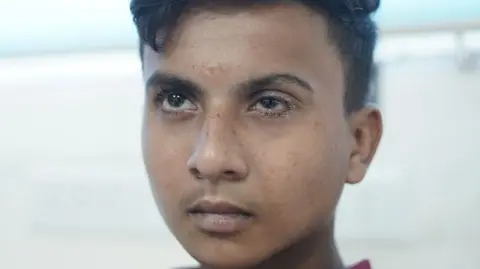
Aarish, 15, sits on a hospital bed in the central Indian state of Madhya Pradesh. A pair of dark glasses hides a painful injury in his left eye.
His cornea was damaged a week ago when an improvised firecracker device that he bought to celebrate the Diwali festival exploded near his face, causing him to lose vision in one eye. He has undergone emergency surgery and his doctor says only time will tell how much sight he can regain.
The teenager, who doesn't go to school, says he's most worried about missing work - his father works as a gardener and Aarish repairs televisions to supplement the family income. Child labour is illegal in India, but millions of children work. Indian law allows children above 14 years to work in some industries which are seen as non-hazardous.
Aarish is among hundreds of children and young adults from at least five states across northern India who have suffered serious eye injuries from using the same kind of device - called carbide guns - during Diwali.
The carbide gun, a rudimentary device, using calcium carbide in a plastic pipe, gives dramatic results - a loud blast that sounds like a gunshot, accompanied by fiery sparks. But the explosion is unpredictable and often delayed - officials told the BBC that many of the injuries occurred when children peeped inside the pipe to check just as the blast happened.
The sale and purchase of calcium carbide is regulated in India, but farmers and shopkeepers often use it to artificially ripen fruit. Police officials also say the crude guns are sometimes used to scare away animals from fields.
But many in India had not heard of these guns until last week when a spate of injuries was reported after Diwali. Officials said these devices began flooding local markets in northern India after viral social media videos showed them being used as firecrackers.
More than 100 cases of carbide gun-related eye injuries have been reported in Madhya Pradesh's Bhopal district alone, with at least 15 requiring surgery. Another 100 cases have been reported from three other districts. In Bihar state, 170 cases have been reported, with 40 requiring surgery, says Dr Bibhuti Prassan Sinha, who heads the Regional Institute of Ophthalmology in Patna city. The actual numbers are likely to be higher, he added.
Cases have also been reported from the states of Chhattisgarh, Jharkhand and Uttar Pradesh, as well as capital Delhi. Some states, including Madhya Pradesh, have now banned the use of carbide guns as firecrackers and several sellers have been arrested.
Kavitha Kumar, head of ophthalmology at Hamidia Hospital in Bhopal, says that patients have been coming in with mild, moderate and severe eye injuries.
In milder cases, skin on the eye and around it has sustained chemical injuries and thermal burns. In moderate cases, chemical particulate matter has caused mild damage to the cornea and in severe cases, there's extensive damage to the cornea, causing temporary vision loss. With surgery, the patient may be able to regain their sight over time.
Many patients said that they bought the gun after seeing it on Instagram Reels and YouTube videos. An attractive aspect was the price - at 150-200 rupees ($1.70-$2; £1.28-£1.70) a piece, it was a relatively cheap firecracker that promised to make a big impact.
A search for the term carbide gun on Instagram and YouTube throws up dozens of videos of young people making and using these devices, often accompanied by rap music.
Harinarayanachari Mishra, Police Commissioner of Bhopal, told the BBC that carbide guns are also used in northern India during wedding festivities and by farmers to drive away monkeys.
Dr Partha Biswas, president of the All India Ophthalmological Society, says carbide guns should be banned urgently.
Overall, carbide guns pose a significant risk during various public celebrations, and there's a pressing need for regulation and awareness to prevent future tragedies.