In brief
Ahmed al-Sharaa, Syria's rebel leader, faces online backlash for his request that a woman cover her hair before a photo, igniting debate about the future of governance in Syria and the challenges of uniting its diverse populations.
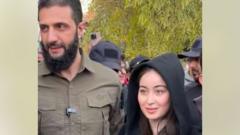
Syria's rebel leader, Ahmed al-Sharaa, has sparked significant online controversy following his request for a young woman to cover her hair prior to taking a photograph together last week in Damascus. The incident has received widespread criticism from various quarters, with both liberal and conservative voices expressing concern over its implications for Syria's societal direction post-conflict. Sharaa, leader of the Sunni Islamist group Hayat Tahrir al-Sham (HTS), stated that he did not compel Lea Kheirallah to cover her hair but expressed personal preference regarding his portraits. In an interview with the BBC, Sharaa asserted, "I did not force her. But it's my personal freedom. I want photos taken for me the way that suits me." Kheirallah, who described Sharaa's request as gentle, stated that she felt the leader had the right to present himself as he wished.The backlash underscores the sensitive social and political landscape of a country that is home to a wide array of religious and ethnic groups. Sunni Muslims constitute the majority of Syria's population, while minorities include Christians, Alawites, Druze, and Ismailis. Different factions among the opposition have divergent visions for the future of governance in Syria, with some pushing for secular democracy and others advocating for Islamic law.Although initially imposing strict behavioral and dress codes in the areas under its control, HTS has recently relaxed such rules in response to public sentiment. The interaction between Sharaa and Kheirallah was further amplified on social media, leading many to perceive it as a troubling signal of a potential shift towards more conservative policies, such as mandating hijabs for women. Conservative commentators, especially those affiliated with hardline Islamist ideologies, criticized Sharaa for appearing in public with a woman who did not conform to traditional dress standards. They expressed concern that his actions might indicate a liberalization contrary to their strict religious principles. On the opposing end, liberal critics fear that such incidents indicate a regressive trajectory for women's rights and overall freedoms in a post-Assad Syria.Sharaa's encounter highlights the tensions that will face any future leadership in Syria, as they navigate between maintaining support from a diverse populace and adhering to competing ideological beliefs. As the country moves forward, the challenge of forging a unified governance model that respects the aspirations of its varied communities looms large—making every public interaction a potential flashpoint for discussion and debate about the nation's future.