In brief
A federal court has decided to keep the Florida-based immigration detention center, informally termed 'Alligator Alcatraz', open despite concerns about its compliance with environmental regulations. This ruling has raised significant questions regarding the responsibilities of state versus federal entities in managing such facilities and their ecological impacts. Environmental groups, pledging ongoing litigation, express concern over the construction's haste in a crucial ecosystem without proper reviews.
ORLANDO, Fla. – The controversial immigration detention center in the Florida Everglades, often referred to as 'Alligator Alcatraz', has been authorized to remain in operation following a decision by the Eleventh Circuit Court of Appeals. The ruling upheld a previous order blocking a lower court's direction to close the facility due to alleged violations of federal environmental laws.
A majority of the judges on the panel indicated that since the facility was constructed and is operated by the state of Florida, it does not fall under the jurisdiction of federal environmental regulations that necessitate an impact review.
During the preliminary injunction discussion, U.S. District Judge Kathleen Williams had previously ruled that the state did not seek federal reimbursement for the facility, anticipating ramifications from the ongoing legal challenges.
In an early hearing, the court opted to pause Williams' order shortly after its initial issue last August to allow for further assessment of the case, which has sparked significant public interest and concern from environmental advocates.
Environmental groups such as Friends of the Everglades and the Center for Biological Diversity, who are among the plaintiffs in the lawsuit, expressed their determination to continue the fight against the detention center, reaffirming their commitment to protecting the fragile ecosystem surrounding the Everglades.
“This fight is far from over,” stated Eve Samples, executive director of Friends of the Everglades. “Alligator Alcatraz was hastily erected in one of the most fragile ecosystems without the most basic environmental review, at immense human and ecological cost.”
Despite the appellate ruling, the dissenting opinion by Judge Nancy Abudu argued that immigration regulation is a federal responsibility, emphasizing that even though Florida managed the construction, it should not abrogate federal control over such matters.
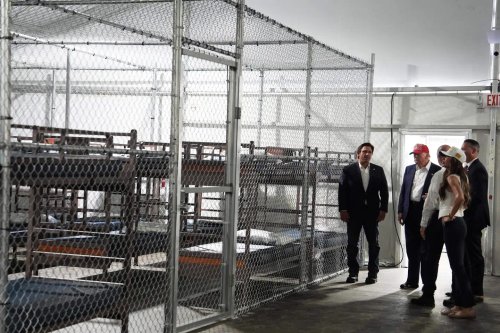
The emergence of 'Alligator Alcatraz', opened last summer as part of a broader immigration enforcement initiative during the Trump administration, has further raised alarm among activists, particularly following reports of abusive treatment of detainees within the facility.
As detection on environmental health, human rights, and legal governance unfolds, ongoing litigation is expected to probe deeper into both the operational ethos of the detention center and its broader implications for federal and state governance concerning immigration.