
In brief
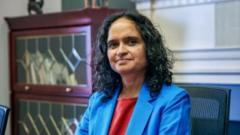
Shailaja Paik, a professor at the University of Cincinnati, has been awarded the prestigious MacArthur "genius" fellowship for her groundbreaking research on Dalit women. Escaping a life of poverty and discrimination in Pune, Paik is dedicated to re-authenticating narratives around caste, gender, and social justice on an international platform.
In the slums of Pune, India, a remarkable story of resilience and scholarship emerges from the life of Shailaja Paik. Once a young girl navigating the complexities of poverty and caste discrimination, Paik has grown to become one of the esteemed recipients of the 2023 MacArthur "genius" fellowship, an accolade that acknowledges creative and innovative contributions to global society.The MacArthur Foundation presented the award to Paik as part of its initiative to honor individuals who exhibit extraordinary potential and track records in their fields. With an accompanying stipend of $800,000 over five years, this fellowship emphasizes Paik's commitment to amplifying the experiences of Dalit women, those marginalized in India’s rigid caste system.Marlies Carruth, director of the MacArthur Fellows Program, spoke highly of Paik's focus on the intersectionality of caste, gender, and sexuality. Her research elucidates how caste discrimination persists and affects the lives of marginalized groups, creating pathways for broader conversations around human rights and social justice.In her conversations with news platforms, Paik expressed gratitude for the fellowship, recognizing it as a means to promote Dalit issues as pivotal to global human rights discussions. She aims to showcase the struggles faced by the marginalized while forging connections that transcend geographical and cultural boundaries.Born in a cramped tenement in furious poverty, Paik's childhood was marked by adversity including inadequate access to basic water and sanitation. Yet her pursuit of education became her beacon. Encouraged by her parents, she excelled in academia, despite the challenges of studying amidst noise and limited space.During her undergraduate studies at Savitribai Phule Pune University, Paik noticed a gap in the historical documentation of Dalit women. Driven by this realization, she published her first book in 2014, focusing on the intricate barriers Dalit women face in accessing education.Paik’s incisive work highlights the systemic neglect experienced by Dalits, a community comprising 17% of India's population, whose history remains largely unwritten. In her second book, *The Vulgarity of Caste*, published in 2022, Paik explored Dalit performance art, which led to accolades and recognition in scholarly circles.As the discussion of caste discrimination increasingly reaches the United States, Paik challenges both Dalits and non-Dalits to confront these issues collectively. In academia, she identifies language barriers and resource disparities as significant obstacles for marginalized scholars trying to navigate higher education.With her MacArthur fellowship, Paik plans to further her research and advocacy work, engaging more deeply with her fellow scholars in the pursuit of equality and justice. She remains steadfast in her vision to dismantle casteism, believing in the transformative potential of education and awareness to reshape narratives.Paik's journey from the slums of Pune to becoming a well-respected historian and activist serves not only as an inspiration but also as a crucial reminder that the struggle for justice and recognition continues. She urges society to ally with those bearing the weight of discrimination, transforming the landscape for future generations through concerted efforts in scholarship and activism.


