In a landmark decision, the UK High Court has ruled that mining giant BHP must take responsibility for a dam collapse in Brazil that led to the nation's worst environmental disaster, impacting countless lives and communities.
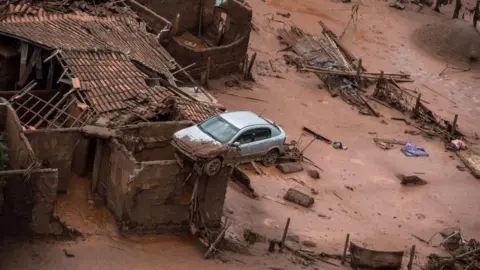
The disaster, which occurred in 2015 in Mariana, Brazil, resulted in the death of 19 individuals and released millions of cubic meters of toxic sludge into the environment, polluting waterways and damaging homes. The ruling in question relates to a civil lawsuit that involves over 600,000 plaintiffs, including civilians and local governments, with the claims valued at up to £36 billion ($48 billion).
BHP has expressed intentions to appeal the High Court decision, arguing that several claimants had already received compensation through processes in Brazil. The company stated that many involved in the London lawsuit had previously benefited from reparations related to the disaster.
The dam, owned by Samarco—a joint venture between BHP and Vale—was designed to store mining waste. The court found that BHP's actions, particularly in continuing to raise the dam's height despite safety concerns, were a principal cause of the catastrophic failure.
London's High Court ruled that this negligence rendered BHP liable under Brazilian law, a significant point for the ongoing legal battle. Alongside the UK lawsuit, another claim against Samarco's other parent company, Brazilian mining firm Vale, is ongoing in the Netherlands with over 70,000 plaintiffs involved.
Judge Finola O'Farrell emphasized that the firm's negligence was a direct and immediate cause of the disaster. Meanwhile, Brandon Craig, BHP's President for Minerals Americas, noted that many of the 240,000 claimants involved in the lawsuit had already received compensation in Brazil.
The situation has become complicated, with various allegations surfacing against the law firm Pogust Goodhead, which represents the claimants. BHP has denied these claims and has expressed the view that the Brazilian jurisdiction is more appropriate for handling compensation related to the disaster.
This case not only underscores the challenges of corporate responsibility in environmental disasters but also highlights the ongoing struggles faced by affected communities in seeking justice and reparations.