
In brief
The recent suspension of tariffs signals a momentary pause in a looming trade war, benefitting each nation involved as they navigate the complexities of border security and drug trafficking.
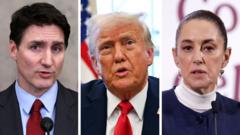
In a reprieve from imminent economic discord, President Donald Trump has decided to delay the implementation of significant tariffs on Mexico and Canada for 30 days. This decision comes after intensive negotiations that saw both neighboring countries agree to stricter border security policies and enhanced measures against fentanyl trafficking. While Trump touts his leverage of the U.S. economy to secure concessions, leaders from Canada and Mexico also emerge with commendable political win.Trump's administration has a history of tariff imposition, as seen during his first term with steel and aluminum tariffs. However, the current tariffs threatened against Mexico and Canada would have a more severe impact, not only on local economies but potentially on global trade as well. As uncertainty looms, businesses are cautious; investments and new hiring strategies may be put on hold pending clarity over the next steps following the 30-day suspension.In Canada, Prime Minister Justin Trudeau enjoys a temporary respite. Trudeau's administration, facing internal pressures due to his status as a lame duck, has initiated various border security measures aimed at satisfying U.S. concerns. These initiatives include a significant investment of C$1.3 billion to combat the fentanyl crisis and bolster law enforcement coordination with the U.S. Enhanced surveillance efforts are visible with the introduction of drones and specialized helicopters patrolling the border, demonstrating Canada’s commitment to address security issues.Conversely, in Mexico, President Claudia Sheinbaum has managed to skillfully navigate the confrontation with Trump, marking a potential victory for her administration. Acknowledging the urgency of the situation, she expressed confidence in the possibility of avoiding the full brunt of tariffs, successfully negotiating not only a halt on the 25% tariffs on Mexican exports but also obtaining a commitment from Trump to address arms trafficking into Mexico. The measures agreed upon were seen as pivotal for Sheinbaum, allowing her valuable time to reinforce collaborations, particularly with U.S. health and security officials regarding fentanyl.As both countries adapt to the evolving dynamics of this unique negotiation scenario, the delicate balance of diplomacy, national security, and economic stability continues to shape the future of trade relations in North America. Each leader, while claiming victories, must proceed with caution as they collectively navigate this intricate web of international commerce and security concerns.

