In brief
Two decades ago, the world witnessed one of the deadliest natural disasters in history when a colossal tsunami followed a powerful earthquake in the Indian Ocean, claiming countless lives and leaving behind unimaginable destruction.
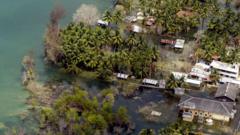
On December 26, 2004, I embarked on what was meant to be a joyful journey to Havelock Island in the Andaman and Nicobar Archipelago. Excited to explore the pristine beaches and beautiful landscapes, I boarded a ferry filled with anticipation. As the boat pulled away from Phenix Bay in Port Blair, I was blissfully unaware of the impending doom. Within moments of setting sail, the ferry jolted violently, and I witnessed the neighboring jetty collapse into the sea — a shocking prelude to the calamity that had struck.The powerful 9.1 magnitude earthquake off the coast of Sumatra triggered a tsunami that affected numerous countries, claiming approximately 228,000 lives, with Indonesia, Sri Lanka, and India suffering the most devastation. The Andaman and Nicobar Islands, located just 100 kilometers from the epicenter, were hit by waves reaching heights of 15 meters, leading to substantial loss of life and property. Official reports indicated that 1,310 people were confirmed dead, but many remain unaccounted for.Our ferry was soon forced to turn back due to the extensive damage at Havelock's jetty. As we returned to Port Blair, my senses were overwhelmed by the scenes of destruction that awaited us — buildings reduced to rubble, overturned boats littered across the streets, and countless lives thrown into disarray in an instant.In the aftermath of the natural disaster, our plight was compounded by the scarcity of resources and the compromised state of essential transportation infrastructures. Many islanders found their homes engulfed by the invading waters, while survivors shared harrowing stories of loss, survival, and resilience. I met a nine-year-old girl who described nearly drowning in her flooded house, echoing the tales of many others who lost everything in mere moments.The days that followed witnessed widespread relief efforts, with military and civilian agencies collaborating to address the profound aftermath. However, delivering aid to the various islands proved challenging, as many jetties were left inoperative. Yet, amidst the chaos, survivors emerged with tales of strength and fortitude, highlighting their journey of recovery in the face of adversity.As I reflect on that day every year, I continue to ponder the fragility of life during disasters like these. The harrowing experience has profoundly shaped my understanding of nature’s capacity for destruction. I frequently consider the path that my life took as I narrowly escaped one of history’s deadliest natural calamities — a reality that thousands did not survive on that tragic day. The memories remain a potent reminder of resilience amid devastation and the importance of preparedness for future catastrophic events.As we mark the 20th anniversary of the tsunami, the stories of its survivors continue to inspire and remind us of the need for ongoing awareness and support for communities at risk from climate-related disasters.