In brief
The reinstallation of Francisco Pizarro’s statue in Lima, marking the city’s 490th anniversary, has led to protests by indigenous leaders who view the conquistador as a symbol of destruction and oppression.
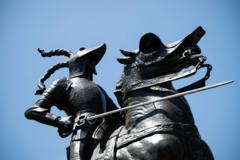
In a ceremony that blended historical commemoration with renewed cultural tensions, a statue of Francisco Pizarro was reinstated in Lima, Peru, after being removed for over two decades. The event honored the 490th anniversary of Lima's founding in 1535, a city established by Pizarro following the conquest of the Inca Empire.Originally sculpted by American artist Charles Rumsey, the bronze statue depicts Pizarro on horseback, brandishing a sword. It was erected in 1935 to celebrate the city’s fourth centenary but was relocated in 2003 due to calls for its removal amid changing sociopolitical attitudes regarding colonial history. Over time, the statue suffered damage from constant train traffic in its previous location.Present at the unveiling ceremony were Lima's Mayor, Rafael López Aliaga, along with Isabel Díaz Ayuso, president of the Community of Madrid, who emphasized the significance of the moment as a historical turning point that altered world history. However, the reinstallation has reignited protests; numerous indigenous activists gathered nearby, expressing that the statue's return is an affront to their culture and history, with one protester stating it is an "offence to all the indigenous peoples of Peru, Latin America, and the world."The clash between supporters who argue for acknowledging history and opponents who view it as an erasure of indigenous pain underscores the ongoing struggle in Peru to reconcile its colonial past with contemporary values. As debates continue, the statue stands as a poignant reminder of a complex legacy that remains deeply ingrained in the nation's identity.