
In brief
With over 17 million voters, Sri Lanka's parliamentary elections are set to unfold as a pivotal test for the nation's new leadership. Barely seven weeks after electing a new president, citizens will cast their votes amidst a backdrop of economic hardship and political instability.
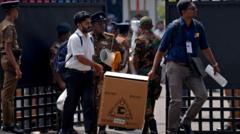
Polling commenced at 07:00 local time (01:30 GMT) and will conclude at 16:00 (10:30 GMT), with results anticipated the following day. In this snap election, 8,800 candidates from 49 political parties and 284 independent groups are competing for 196 directly elected parliamentary seats—part of a total of 225 seats. However, only a fraction of the candidates have engaged in active campaigning, as noted by Rohana Hettiarachchi, executive director of the People’s Action for Free and Fair Elections.The crisis that prompted these elections stems from the high inflation and scarcity of essential goods that triggered widespread protests in 2022, leading to the downfall of former President Gotabaya Rajapaksa. His successor, Ranil Wickremesinghe, has brokered a $3 billion bailout from the International Monetary Fund (IMF), yet many Sri Lankans remain economically strained. As 26-year-old garment worker Manjula Devi revealed, the country still grapples with unmet daily needs following significant increases in poverty rates—25.9% over just four years.Despite the potential for economic improvements, experts warn that Sri Lanka has not recovered from its 2022 economic crisis. The World Bank forecasts minimal growth of only 2.2% for 2024. Observers including Raisa Wickrematunge, a deputy editor noted, highlight that essential public services are suffering—referencing attempts to reduce electricity costs at public hospitals.The elections are expected to feature a multi-faceted competition that may impede the progress of President Anura Kumara Dissanayake's party, Janatha Vimukthi Peramuna, in implementing significant reforms. Analysts caution that Dissanayake may struggle to secure the two-thirds majority necessary for sweeping legislative changes, thus necessitating coalition-building which could complicate policymaking.On the positive side, the election campaign has generally progressed peacefully, with few incidents of violence, a promising contrast to previous electoral cycles. Rohana Hettiarachchi has expressed optimism for a peaceful electoral process, a faint glimmer of hope amidst the country's ongoing challenges.As Sri Lanka votes, the outcome will not only shape the political landscape but also determine the trajectory of its arduous road to recovery.
