
In brief
In a groundbreaking journey recognizing Chile's Antarctic claims, President Gabriel Boric's visit underscores a renewed focus on international climate collaboration.
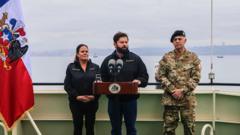
Chilean President Gabriel Boric has etched his name in history as the first leader in the Americas to set foot at the South Pole, landing at the Amundsen-Scott South Pole Station on December 27, 2024. This landmark visit aboard the icebreaker ship Almirante Vial coincides with a mission to highlight the importance of Chile's role in regional sovereignty over parts of Antarctica. "This is a milestone for us," Boric declared in a televised address, celebrating the unprecedented visit not just as a sovereign affirmation but also as a momentous occasion for Chilean Antarctic exploration.Accompanied by a select group of scientists and key cabinet members, including the ministers of the environment and armed forces, Boric emphasized the necessity for Chile to engage deeply in vital scientific projects focused on climate change. His office conveyed a strong commitment to positioning Chile as a significant contributor to international research endeavors in this critical region. Chile is among several nations, including New Zealand and Norway, that assert territorial claims in Antarctica, a continent that functions as a scientific preserve under the Antarctic Treaty from 1961, designed to foster global collaboration and research. The Amundsen-Scott Station, serving as a base for numerous critical climate-related studies, stands as a testament to the spirit of discovery and the collaborative efforts necessary to address ongoing global environmental challenges.Boric, who became Chile's youngest president at 35, steps into this role with an ambitious agenda to promote climate action and scientific unity in the face of escalating climate crises. With the visit, he reminds the world of the shared responsibility for the planet, particularly regarding sensitive environments like Antarctica, crucial for understanding global climate patterns.

