
In brief
With Trump's renewed focus on tariffs against China, factories are grappling with the implications for their operations and workforce. Many businesses are shifting production to countries such as Cambodia to avoid escalating costs, illustrating the complex dynamics of international trade and manufacturing amidst fluctuating US-China relations.
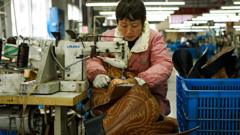
Inside the factories of Jiangsu province, the echo of machines sewing leather cowboy boots churns out a once-thriving American symbol as anxiety looms over their future. "We used to sell around a million pairs of boots a year," shares Mr. Peng, the factory's sales manager. Since the implementation of Trump's tariffs during his first term, that number has drastically dropped.Now, with Trump poised for a potential return to the White House, Chinese manufacturers worry about a sequel to the trade war that once turned their operations upside down. Trump has threatened to enact a 10% tariff on Chinese goods effective February 1, additionally reviewing the entirety of U.S.-China trade. This environment of uncertainty forces many firms, including industry giants, to contemplate relocation to Southeast Asian nations like Vietnam.Factories in Jiangsu have already started observing a decline in orders, prompting layoffs and empty workstations; staff numbers have dwindled from over 500 to just 200. For workers like Mr. Peng, who regard the factory not only as a workplace but as family, the scenario is devastating. The prospect of shifting operations to countries with lower labor costs could decimate their skilled workforce, which has cultivated expertise over decades.The fear of returning tariffs brings grim memories from 2019 when Trump's 15% duties shrouded Chinese made clothes and shoes in increased costs. With orders evaporating, production has slowed significantly. Additionally, many American buyers are already considering pulling back business from China, compounding the existential threat to local factories.On the international front, Chinese businesses like Huang Zhaodong's newly established factory in Cambodia are encountering an influx of demand from major U.S. retailers like Walmart. As a response to tariffs, corporations are pressuring suppliers to relocate production out of China, leaving some manufacturers in challenging yet necessary situations. Huang, who now produces garments for foreign clients, observes, "If you’re making clothes in China under such tariff conditions, it's unsustainable."Despite the rising upsurge in Chinese firms moving to Cambodia and Southeast Asia—where over 90% of clothing factories are now Chinese-run—China continues to exert significant influence through its Belt and Road Initiative. While production shifts may hinder immediate profits and employment in China, this wider strategy props up Chinese investments across emerging markets, reinforcing its importance in global trade.However, as dialogue remains strained between Washington and Beijing, concerns ripple through business circles about the potential deepening of tensions. A recent survey by the American Chamber of Commerce in China indicated that over half of businesses are apprehensive regarding the deteriorating relationship. Mr. Peng expresses hope for amicable discussions, hoping both leaders can mitigate trade tensions and avoid further escalation.With the dynamics of international trade evolving, the impact of Trump’s tariff threats could redefine manufacturing landscapes and relationships, leaving many to ponder whether production might truly return to the U.S., or if the future lies elsewhere entirely.

