
In brief
Brazil, emerging from its worst drought on record, faces new challenges as intense storms claim eight lives and disrupt infrastructure across the nation.
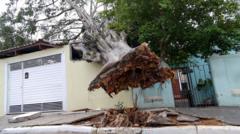
At least eight individuals have lost their lives, and thousands remain without electricity following violent storms that swept through Brazil. The central and southeastern regions bore the brunt, with wind speeds reaching up to 100km/h (60mph) and rainfall measuring as much as 10cm (4in) per day, as reported by the National Institute of Meteorology. São Paulo, the nation's most populous state, recorded seven fatalities, primarily linked to falling trees and infrastructure damage from the severe weather. The unexpected deluge was described by local residents as unexpectedly brief yet intensely damaging.The storms induced widespread power blackouts in São Paulo state, disrupting water supplies as well. Energy provider Enel reported over 1.3 million homes and businesses still without power, aiming for restoration by Monday. Meanwhile, in the Parque São Roberto neighborhood, frustrations boiled over as residents protested on Saturday, protesting 24 hours without electricity. In Brasilia, the capital, the storm resulted in one soldier's death and another's injury at the military police headquarters. The shockingly intense rain even forced officials in Brazil’s Chamber of Deputies—the lower house of Congress—to resort to umbrellas indoors due to roof leaks. While the deluge offered some relief from a 165-day dry spell, it also underscored the harsh realities of Brazil’s climate crisis, accentuated by climate change and the El Niño phenomenon. Recent drought conditions have fueled wildfires, devastating the Amazon rainforest and Pantanal wetlands while engulfing cities in smoke. July saw a two-decade high in Amazon wildfires, highlighting the urgent need for effective climate adaptation strategies.

