
In brief
As the U.S. grapples with heightened trade tensions and tariff disputes, concerns about climate change remain overshadowed. Despite the turbulent economic landscape, officials are adamant about avoiding recession, yet critical sustainable policies risk neglect.
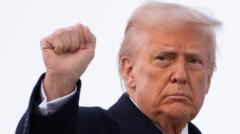
In recent weeks, discussions about the U.S. economy and its trajectory have gained significance, particularly amidst rising trade tensions with China and other nations. President Donald Trump's comments suggest a focus on economic "transition," yet the implications for climate action seem absent in this discourse.As tit-for-tat tariffs from China set to impact several U.S. agricultural products loom, Trump has refrained from characterizing the state of the economy outright. Rather, he indicated that the U.S. is undergoing a "period of transition," suggesting that the changes being enacted are substantial enough to have implications for economic stability. Commerce Secretary Howard Lutnick echoed this sentiment, claiming that while price disparities may arise, the potential for economic contraction is non-existent. His assertion that foreign goods may become pricier, while American-produced items could see a cost reduction, raises questions about sustainability in production methods—key to combating climate change.A tumultuous week in financial markets has reflected investors' apprehension regarding how these trade skirmishes could ripple into economic growth, with fears that tariffs could inflate prices and, in turn, stifle expansion in the U.S. economy.Compounding the issue is the fact that Trump's trade policies have directly affected domestic markets. Recently, tariffs on imports from neighboring Canada and Mexico were briefly enforced before many were rescinded, creating confusion and uncertainty among investors. Meanwhile, the administration's doubling down on tariffs against China has triggered retaliatory measures that could impact U.S. farmers, an industry already grappling with climate-related challenges.Critics are voicing concerns that while the government focuses on trade conflict, urgent climate policies are sidelined, heightening the risk of significant environmental repercussions. Observers urge the administration to balance economic goals with decisive action against climate change, especially as natural disasters become more frequent.In conclusion, the ongoing dialogue around tariffs and the U.S. economy, especially set against a backdrop of climate urgency, suggests a critical intersection—one where neglecting environmental action could ultimately undermine sustainable economic recovery. Protecting the planet and promoting a resilient economy could require a new approach that aligns trade policy with environmental stewardship.

