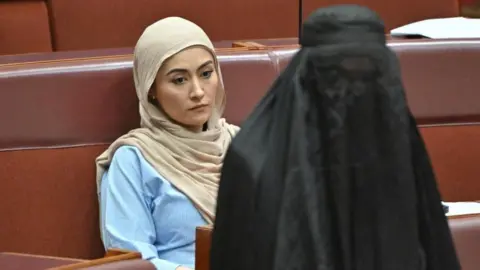
King Charles faced a significant disruption during his royal visit to Australia as independent senator Lidia Thorpe heckled him with chants of "you are not my King." This incident occurred shortly after the King concluded an address at Parliament House in Canberra, marking his presence in Australia for the first time since his ascension to the throne in September 2022. Thorpe, an Aboriginal Australian, expressed her concerns about sovereignty and Indigenous rights as she forced her way from the back of the assembly.
Despite being escorted away by security shortly after her outburst, Thorpe remained firm on her stance, asserting that the King does not belong to the land she represents. In her remarks to the BBC afterward, she insisted on the need for a treaty between the Australian government and Indigenous peoples, stressing that many Aboriginal nations never surrendered their sovereignty to the Crown.
Thorpe, clad in a traditional possum skin cloak during her protest, criticized the legacy of colonialism tied to the British monarchy. Echoing sentiments of discontent among Aboriginal Australians, she suggested that the King should advocate for discussions surrounding peace treaties. "To be sovereign you have to be of the land. He is not of this land," she asserted, highlighting the historical context of colonization.
While the ceremony continued unaffected by the protest, many Australians gathered outside Parliament House, showing their excitement for the royal couple. Young attendees expressed mixed feelings, blending enthusiasm for the royals with awareness of the critical issues highlighted by Thorpe's interruption.
The royal visit was initially intended to address Australia’s relationship with its Indigenous communities, but the protest added unnecessary urgency to the conversation. King Charles discussed his respect for Indigenous cultures and experiences, highlighting their importance in Australia's journey toward reconciliation.
Although Buckingham Palace declined to comment on the protest, they expressed appreciation for the public's support during the visit. The broader backdrop raises questions on Australia's potential shift toward becoming a republic, with increasing calls for Indigenous recognition and rights amid historical debates dating back decades. As King Charles navigates his health challenges, this visit is notably shorter than customary royal tours but impactful in its resurfacing of longstanding national issues.